


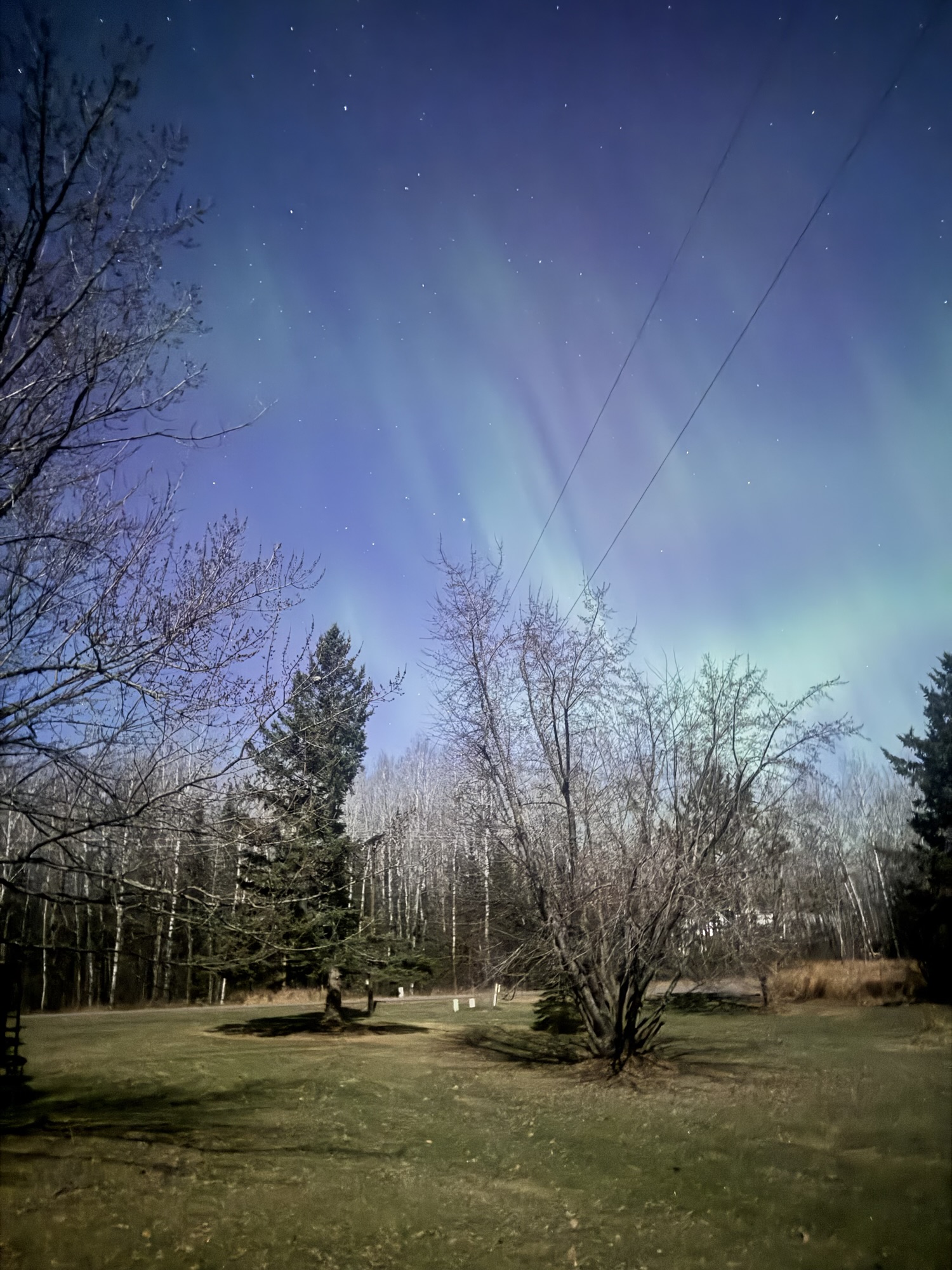


Last night, the clear, dark sky provided residents and aurora enthusiasts in northern Minnesota with an amazing view as the northern lights made their appearance. Reports of vivid green curtains and shimmering waves of light came from towns throughout the northern forest and the Iron Range region, a spectacle typically seen only at far-northern latitudes.
According to forecasts from the NOAA Space Weather Prediction Center, when geomagnetic activity increases, particularly when the Kp index rises to 4 or higher, mid-latitude states like Minnesota become potential locations for visible auroras. The agency’s “Aurora Viewline” products indicate that during strong geomagnetic events, the auroral oval can shift southward, leading to displays that can be seen well beyond the Arctic Circle.
In Minnesota, viewing conditions significantly improve when individuals head north of the Minneapolis-St. Paul metro area, away from light pollution and with an unobstructed view of the northern horizon. The fact that the Northern Lights were observed from Forest Lake, just northeast of the Twin Cities, to Hibbing on the Iron Range, indicates that the geomagnetic disturbance was strong enough to allow for such widespread visibility.
Where and when
Observers near Forest Lake reported seeing greenish glows above the treetops late last night, around midnight or shortly thereafter. Farther north, near Hibbing and other communities in the Iron Range, the display reportedly intensified, featuring rising curtains with occasional red-tinged edges.
The best time for viewing the aurora was between approximately 10 p.m. and 2 a.m., which is the typical peak period for aurora activity at these latitudes. Ideal viewing locations were away from city lights, such as lakeshores or forest clearings facing north.

Why it happened
Solar wind and charged particles from the Sun interact with Earth’s magnetic field and atmosphere to create auroras. When the solar wind is strong and disturbs the Earth’s magnetic field, the auroral oval expands and can move to lower latitudes. This phenomenon allows regions like Minnesota, which don’t frequently experience auroras, to witness these stunning displays.
The current solar cycle has increased overall activity, raising the chances of seeing auroras in mid-latitude areas. For people in Minnesota, this event serves as a reminder of how extraordinary conditions can bring celestial light shows to our skies.
While northern Minnesota regularly sees auroras, they are less common in the more populated mid-northern parts of the state. It’s essential to consider that visibility is influenced by several factors: weather conditions (clear skies), darkness (moon phase and timing), and location (latitude and levels of light pollution).
Tips for next time
- Monitor aurora forecast tools like NOAA’s dashboard and apps for real-time updates.
- Go north of major city lights, face the northern horizon.
- Be outdoors around midnight or into the early morning hours.
- Use a camera with long-exposure settings (5 to 25 seconds) to capture colors and movement.
Discover more from Daily Planet
Subscribe to get the latest posts sent to your email.


