


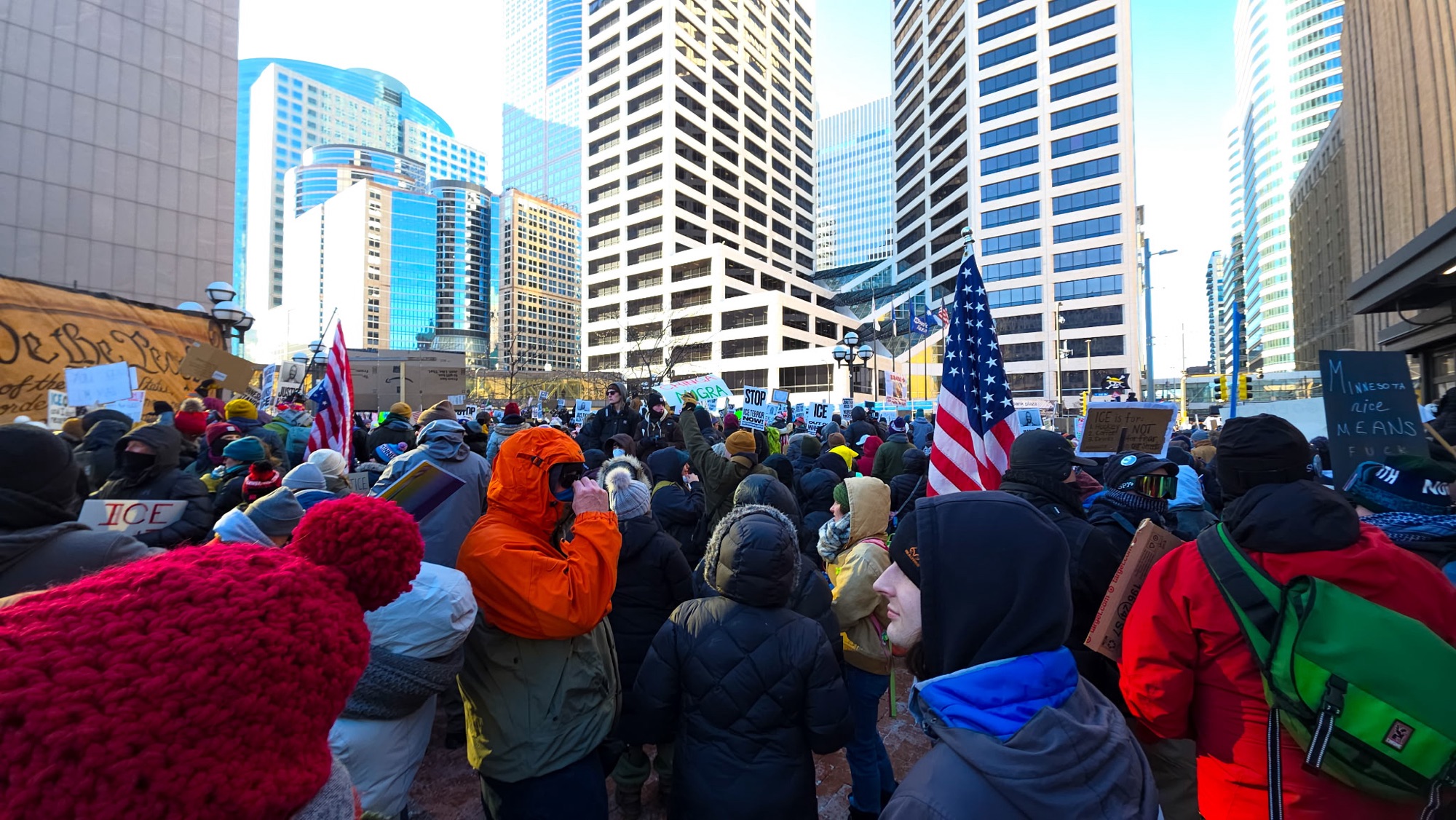

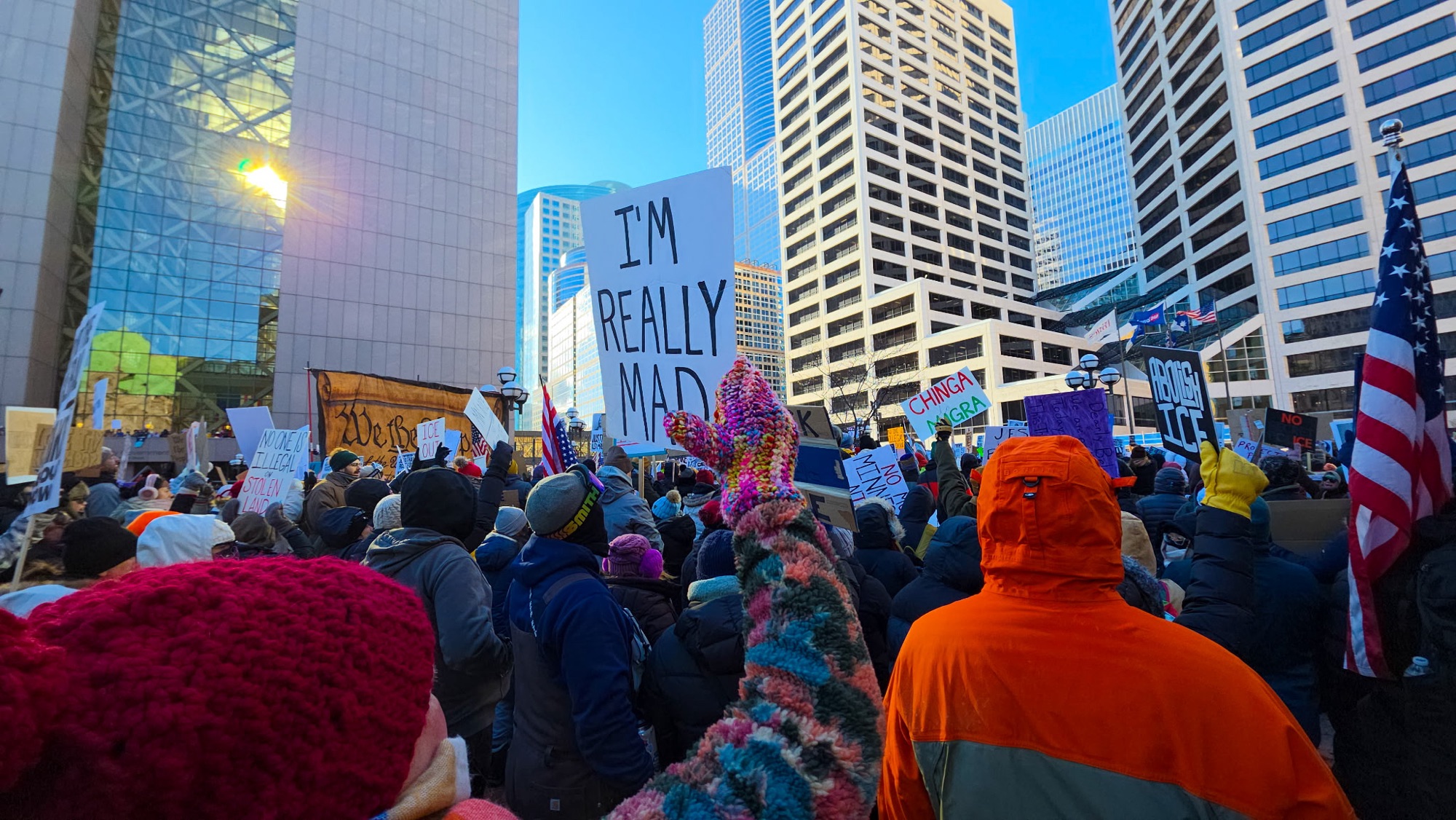
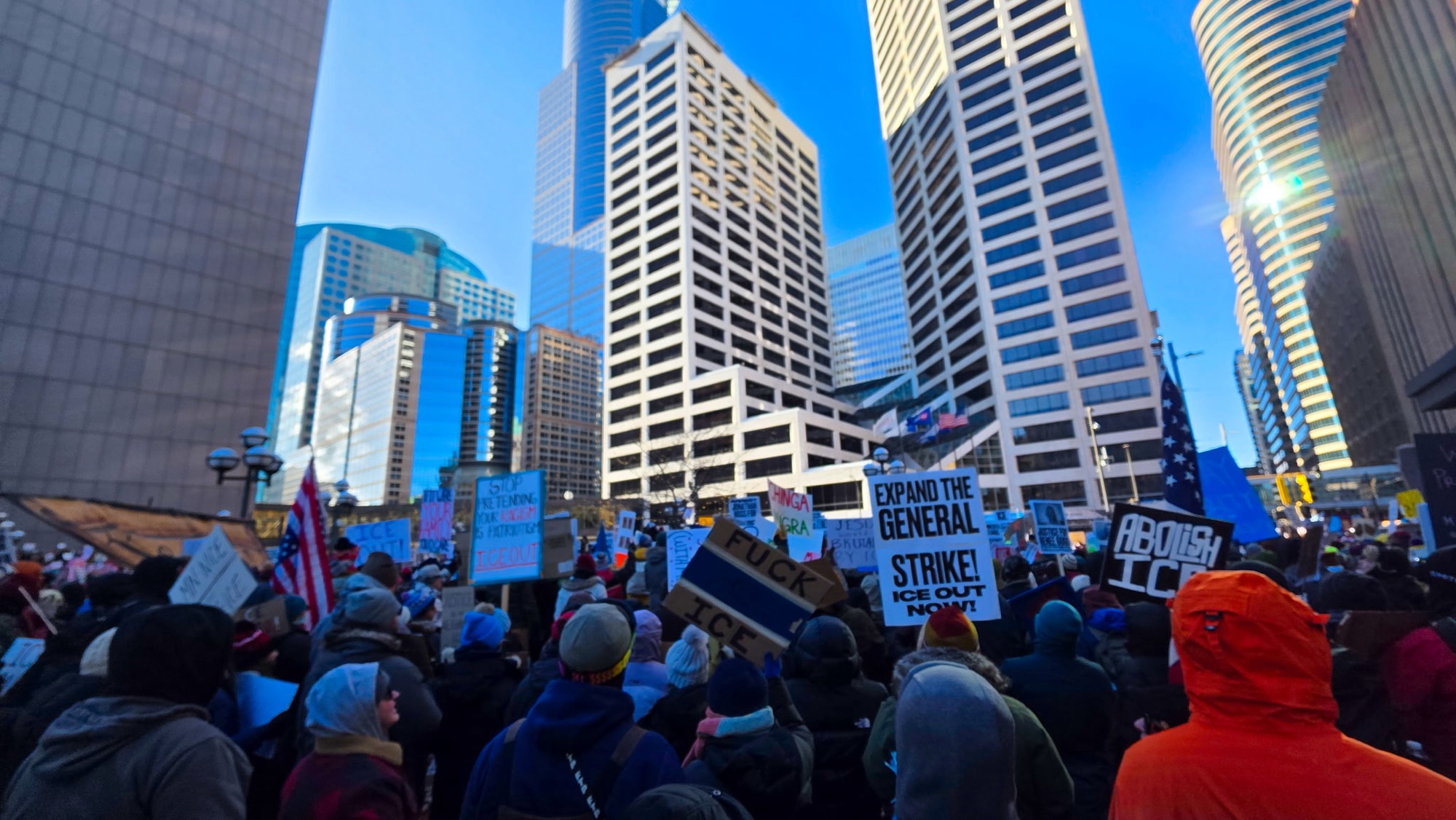
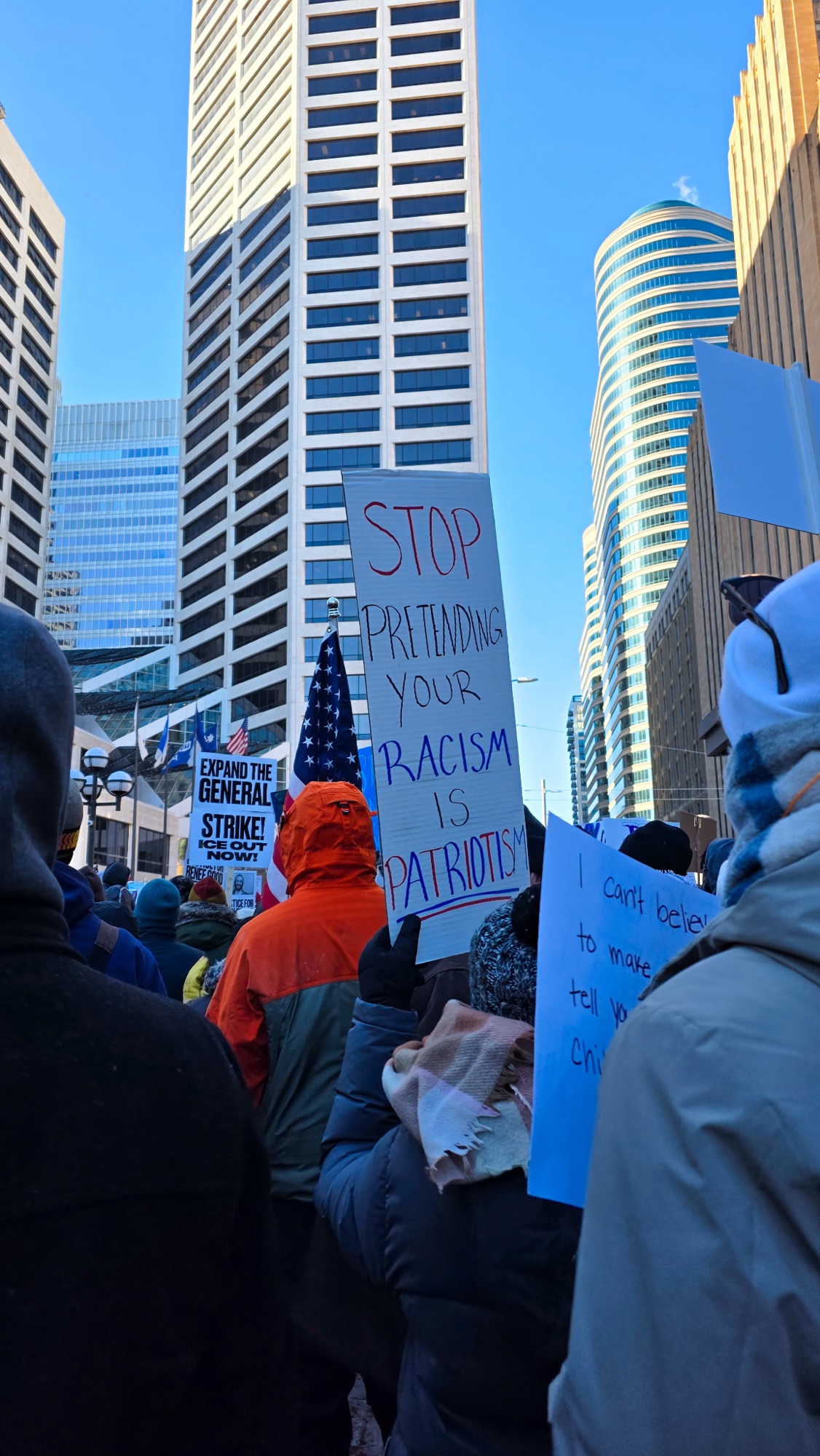
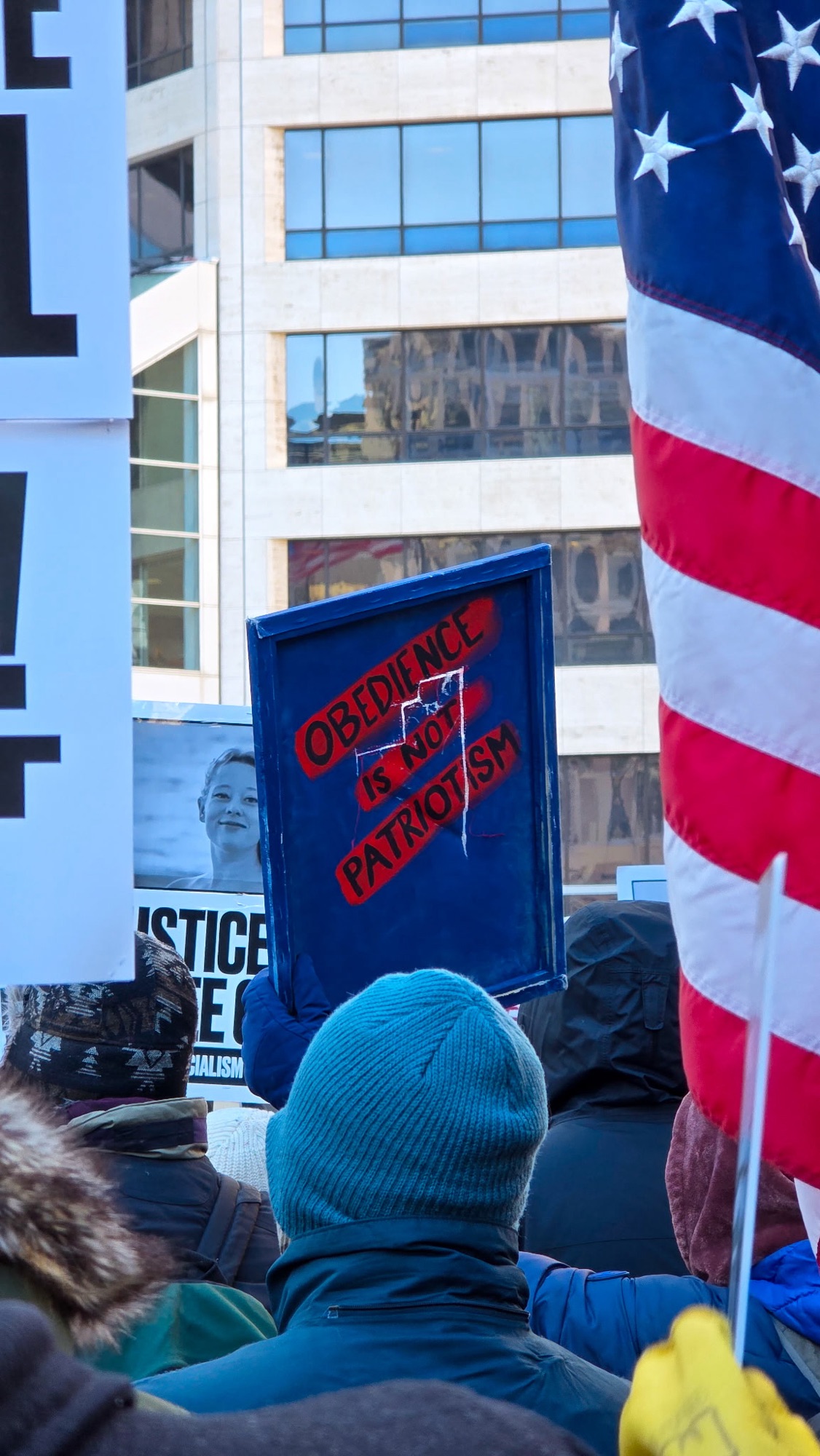
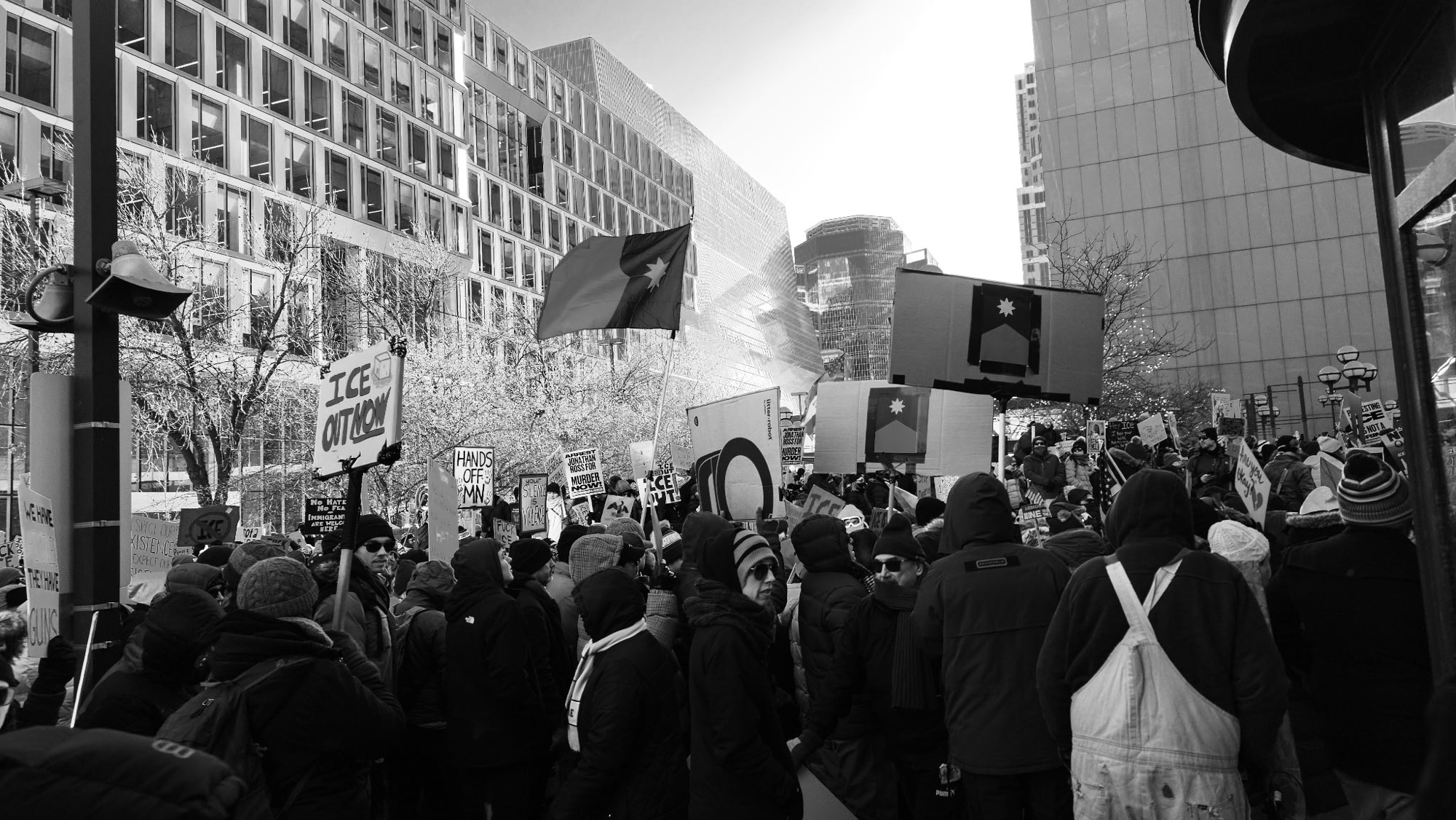

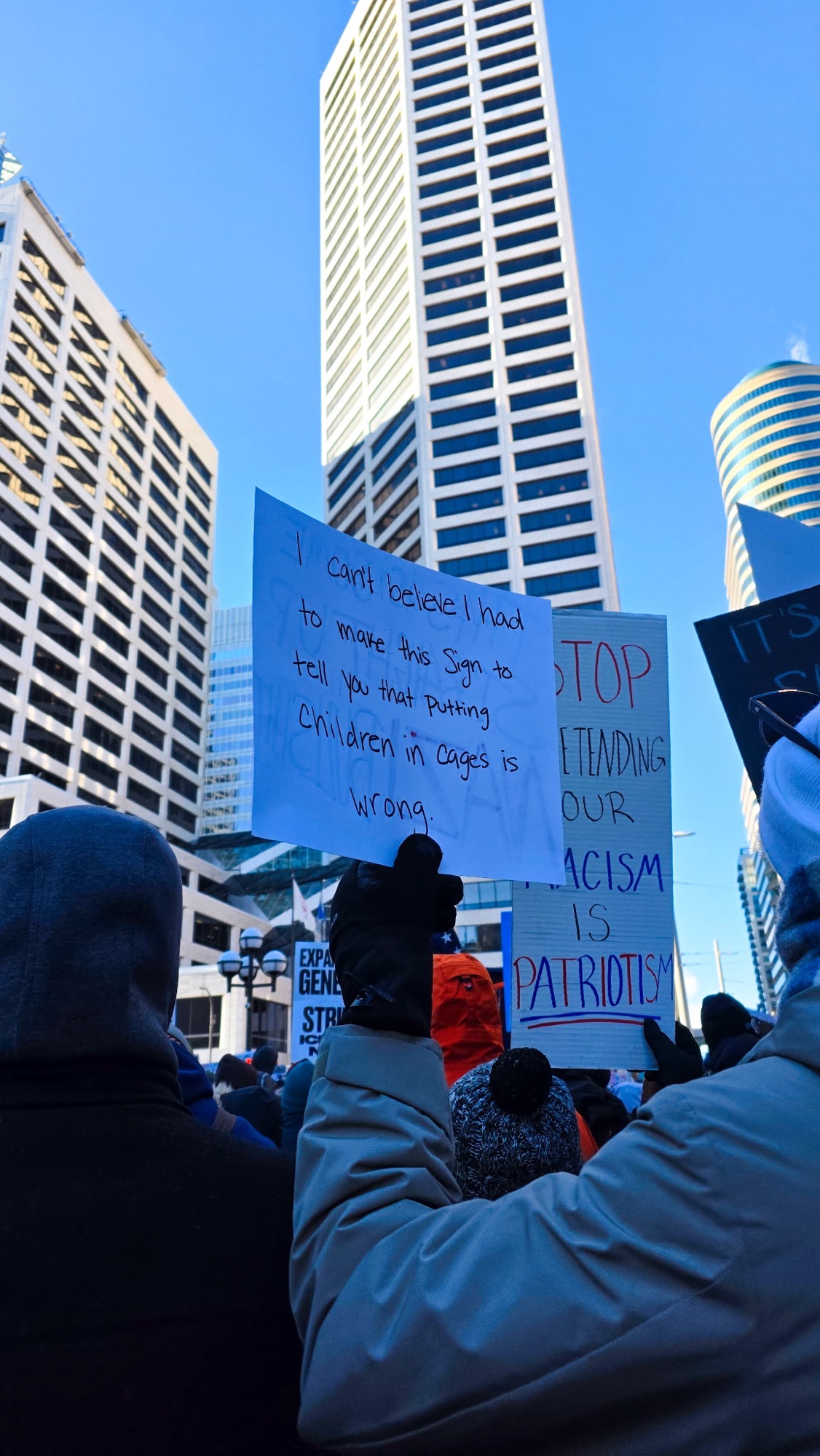

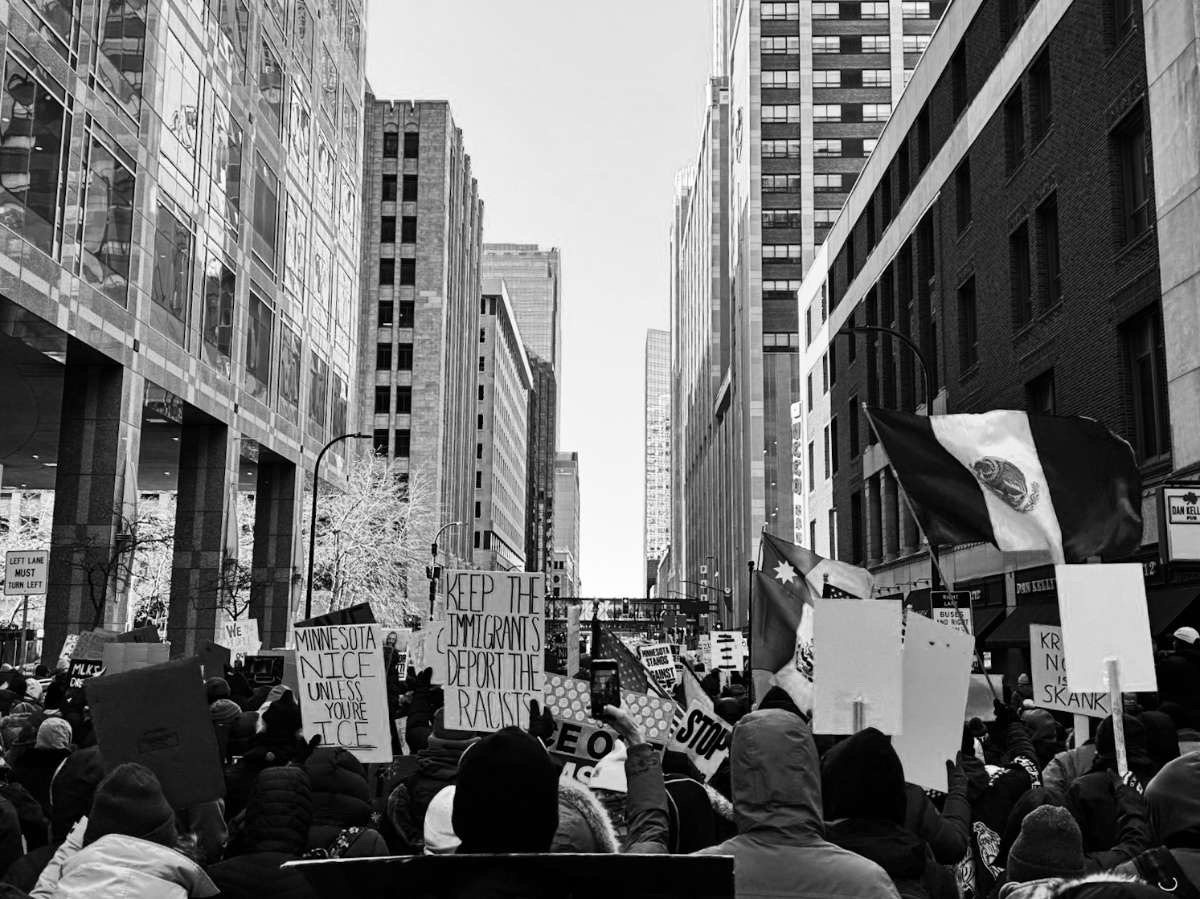
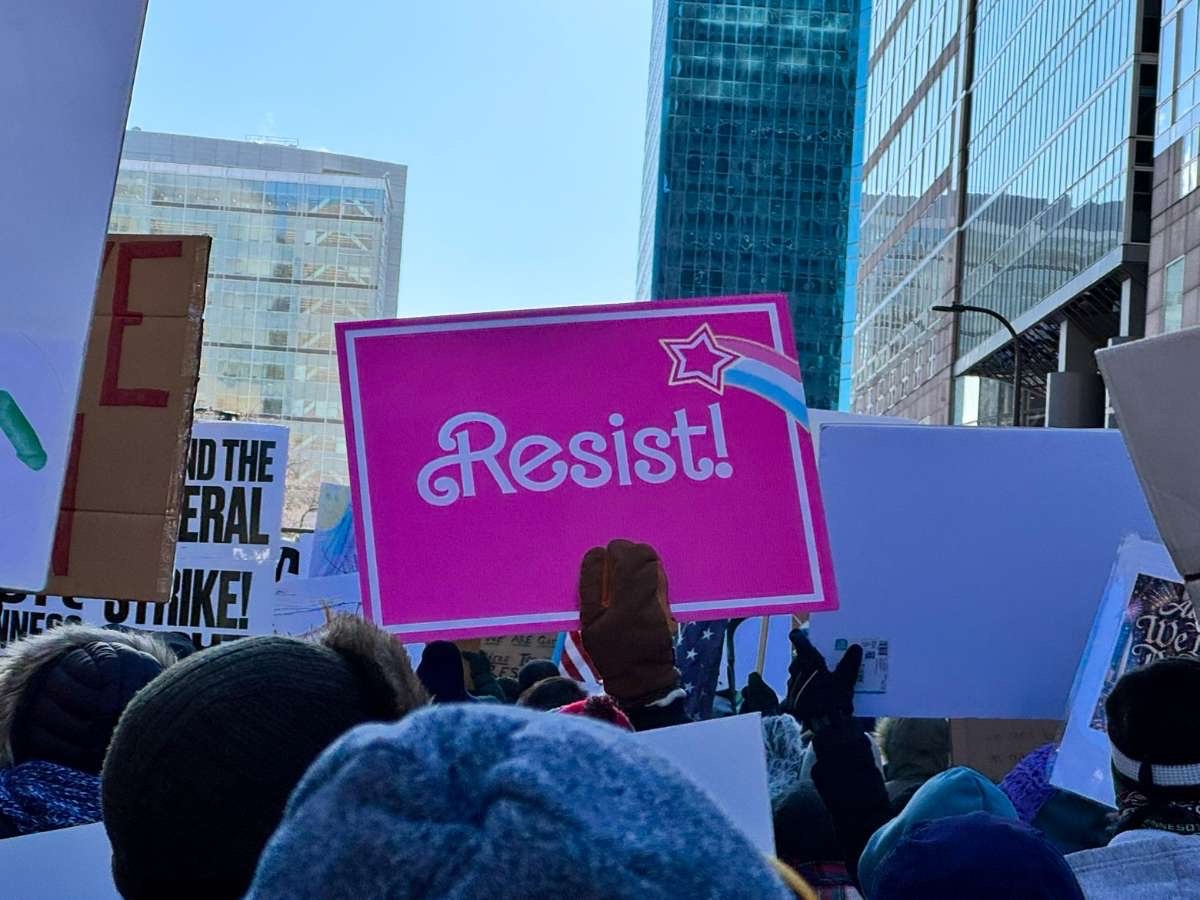
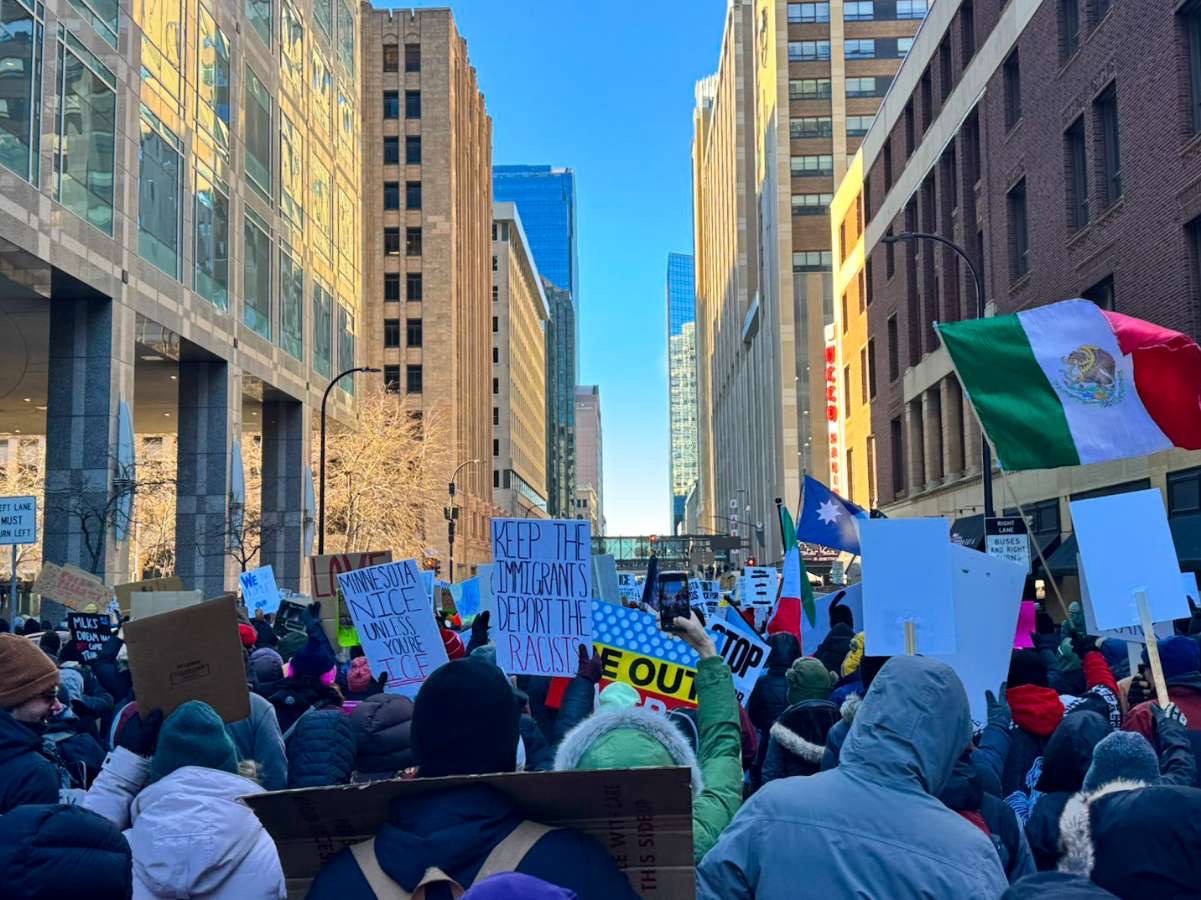
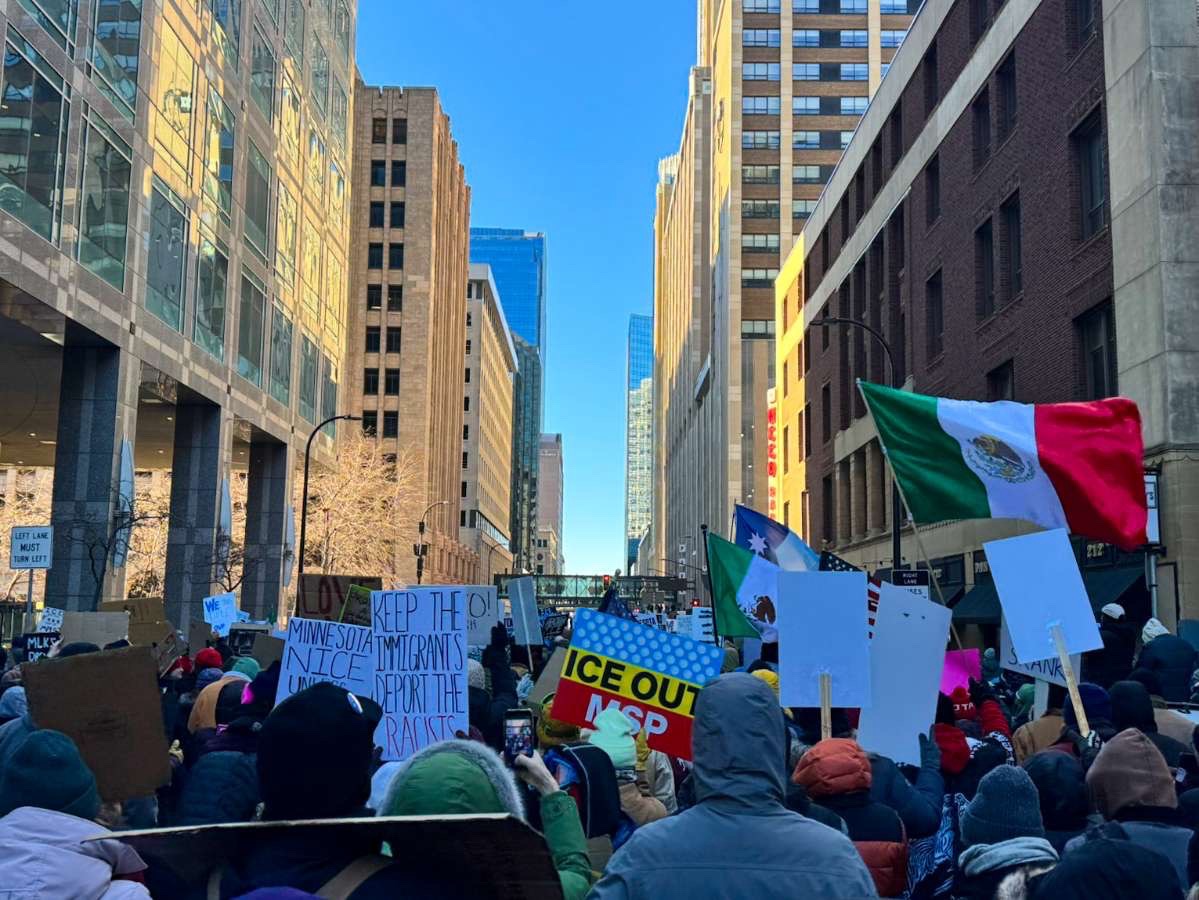

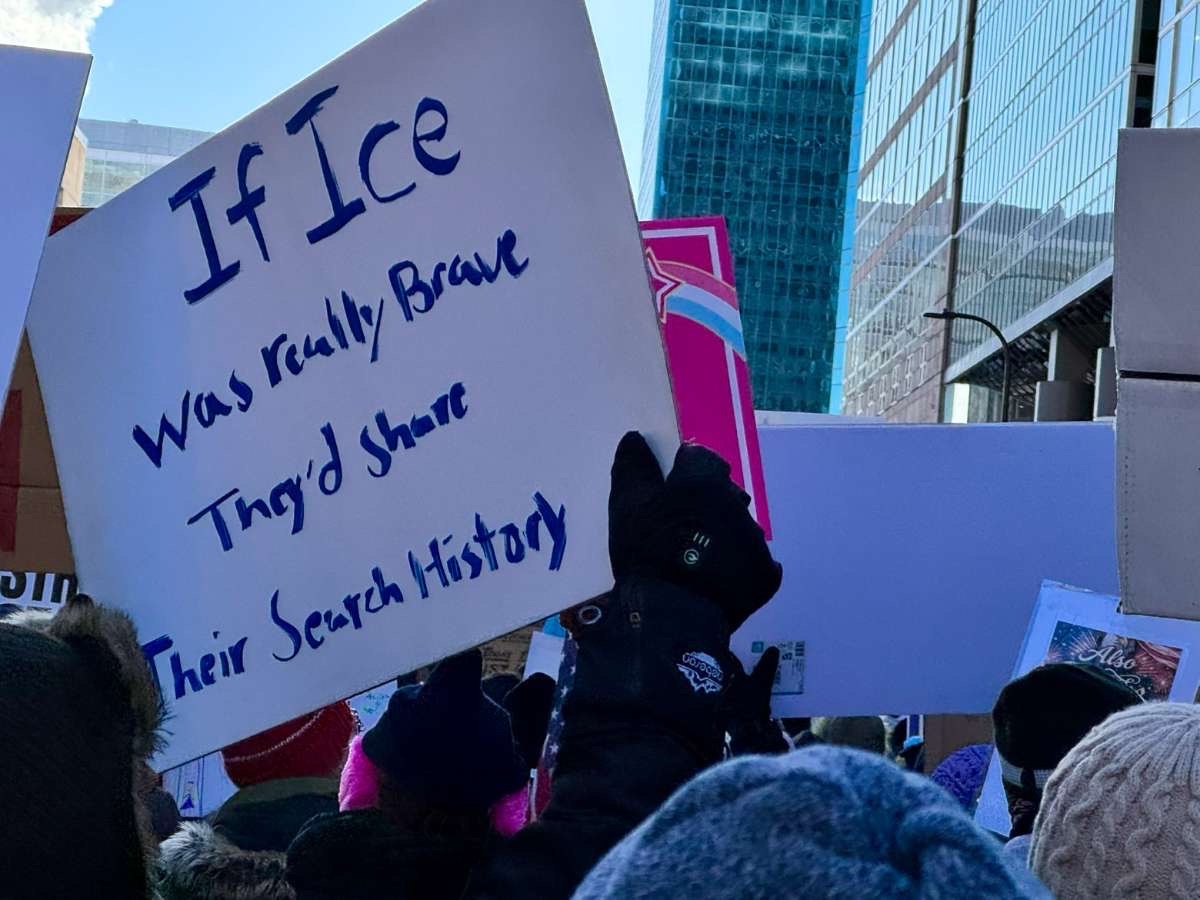


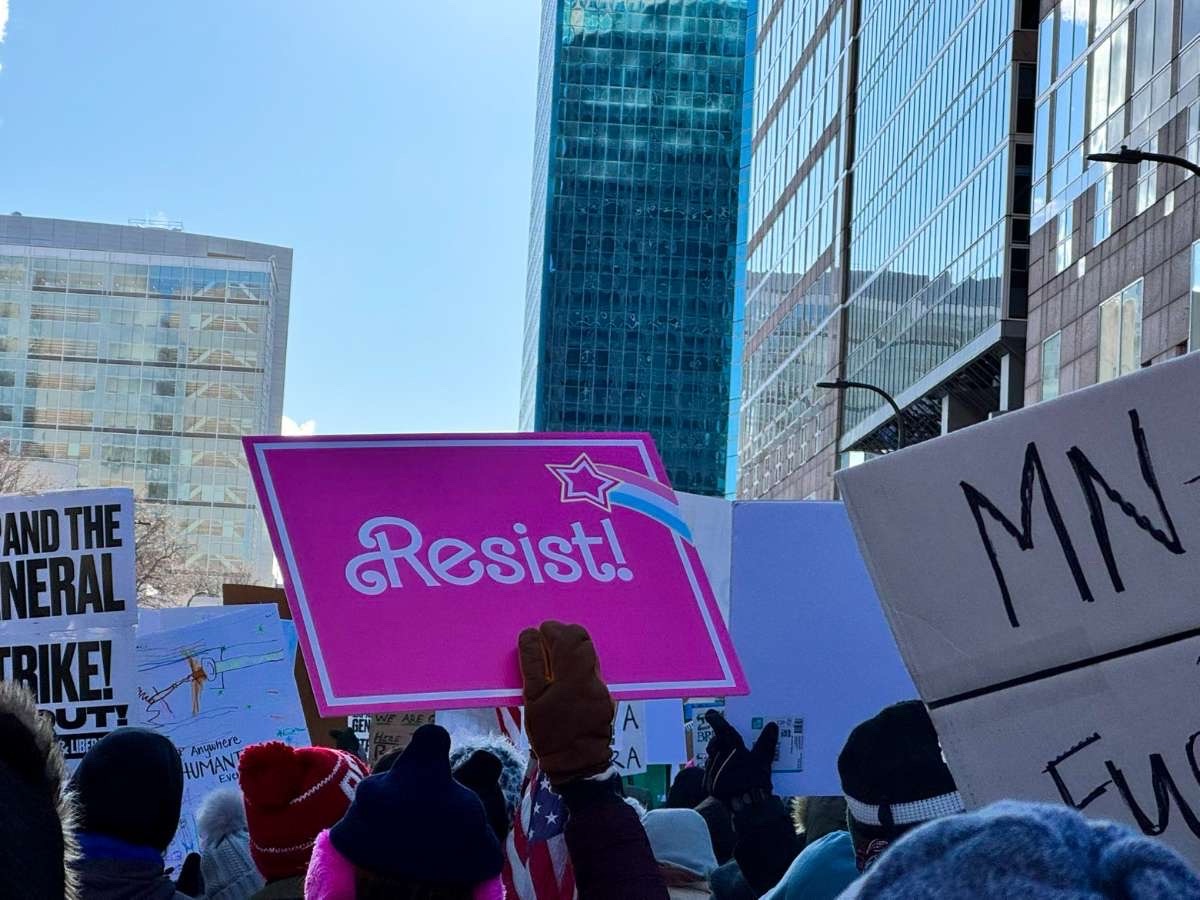


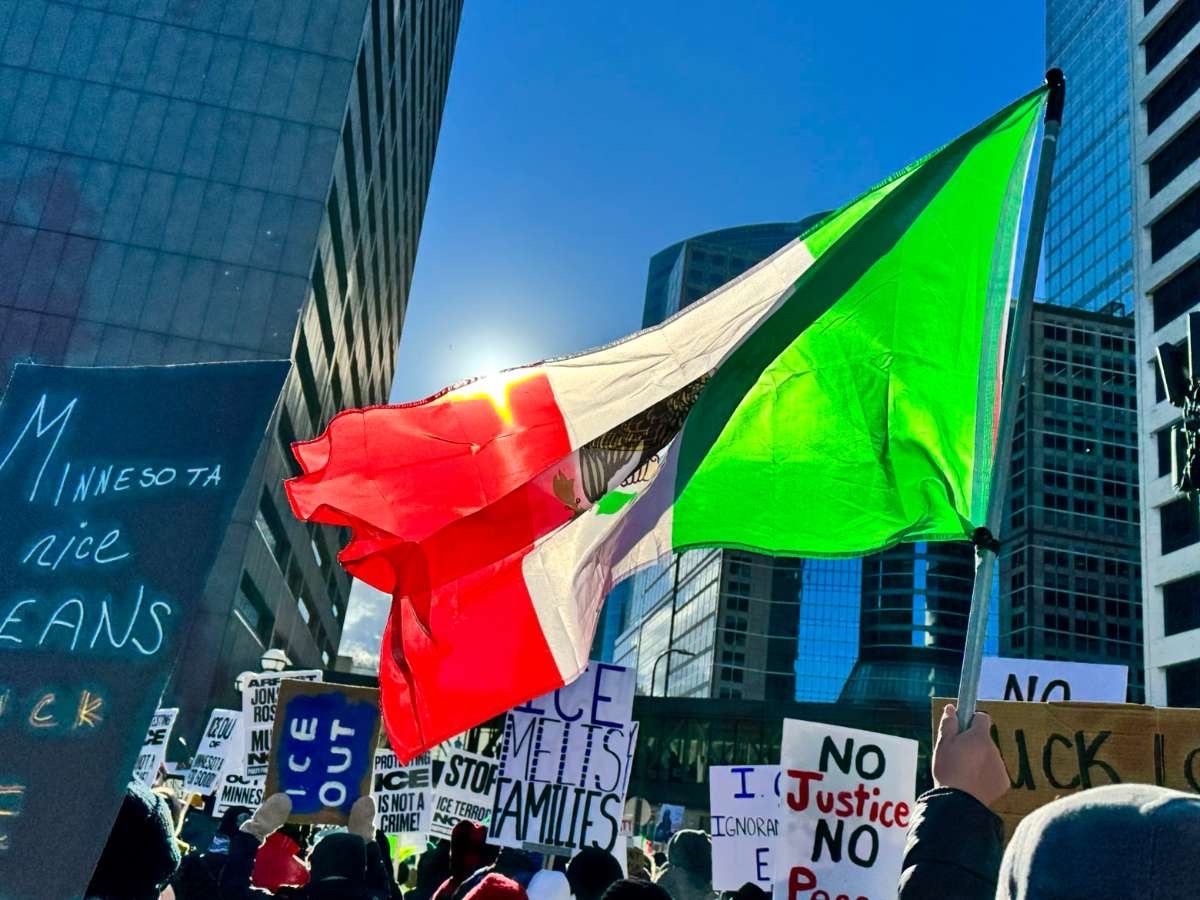


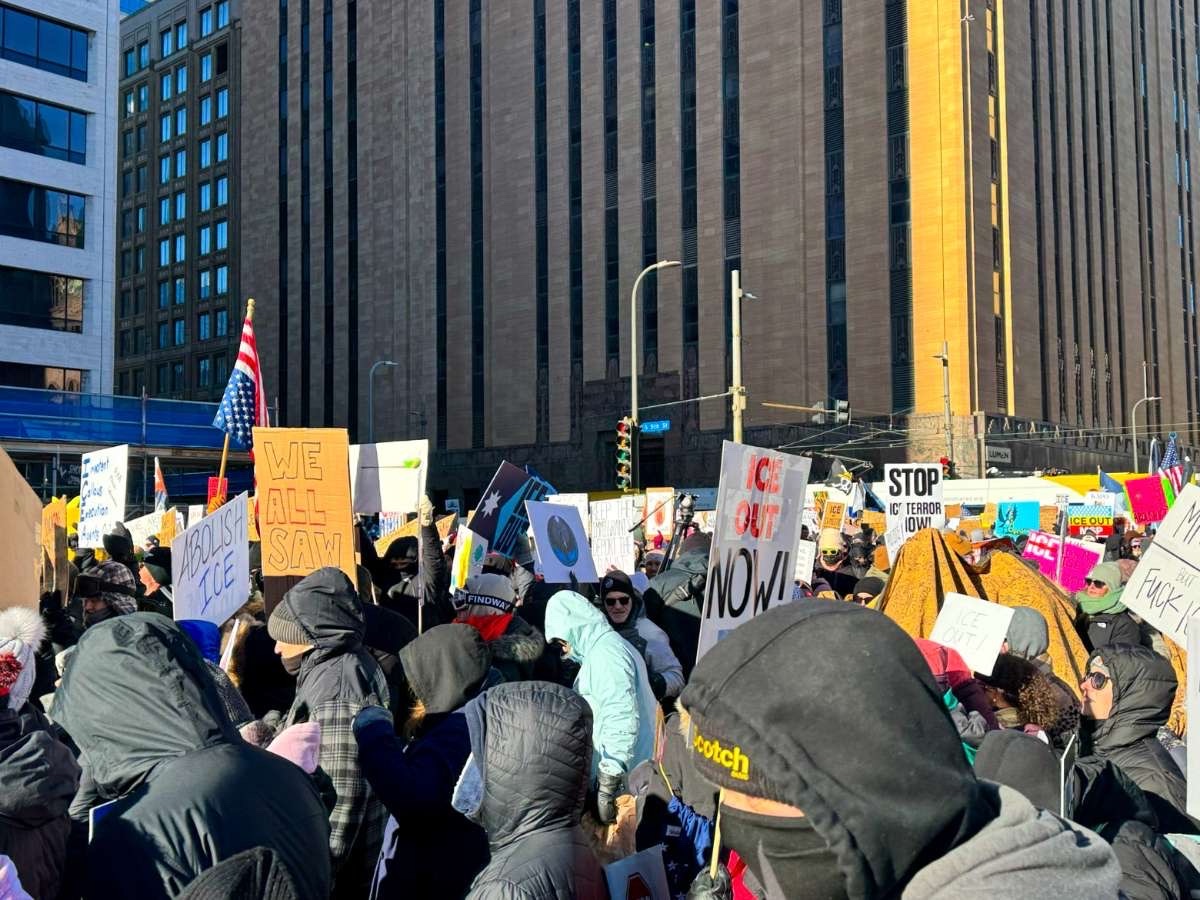
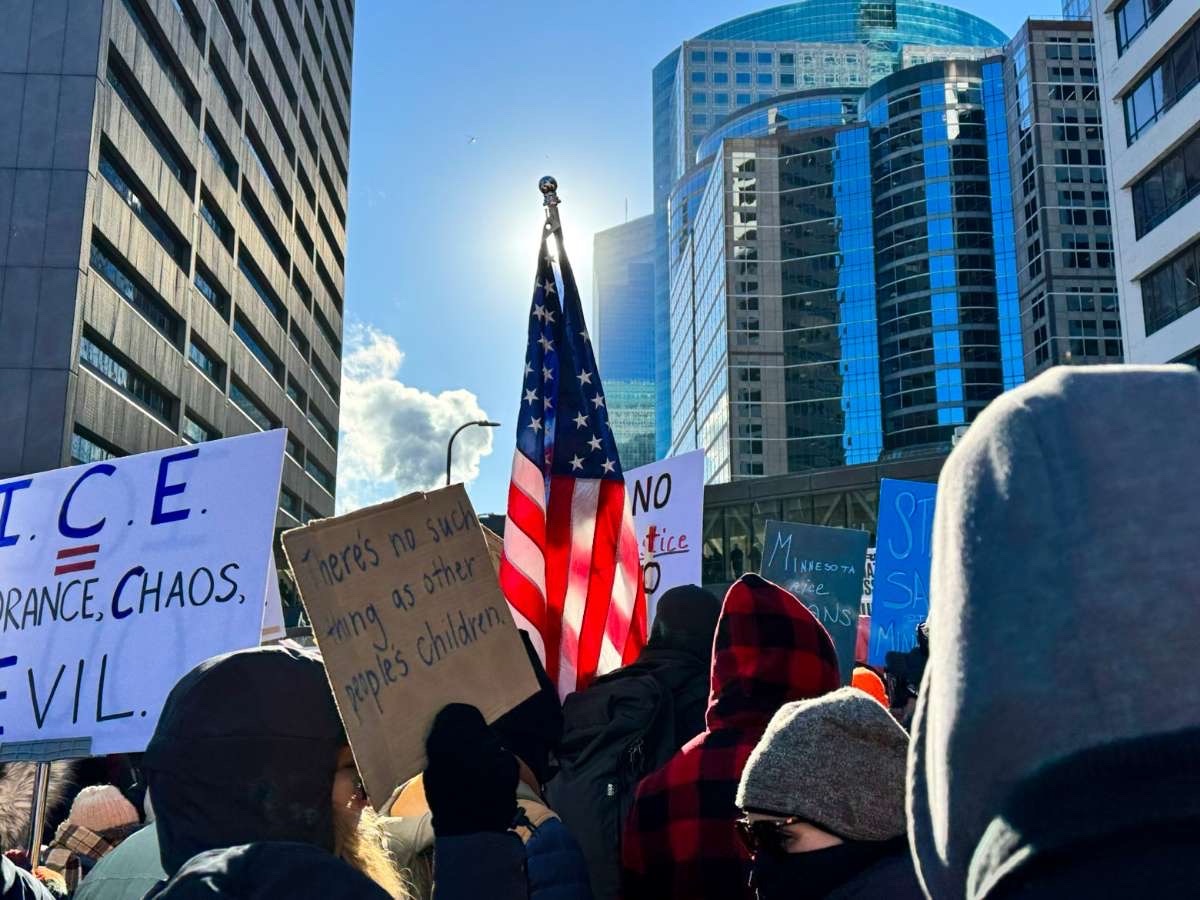

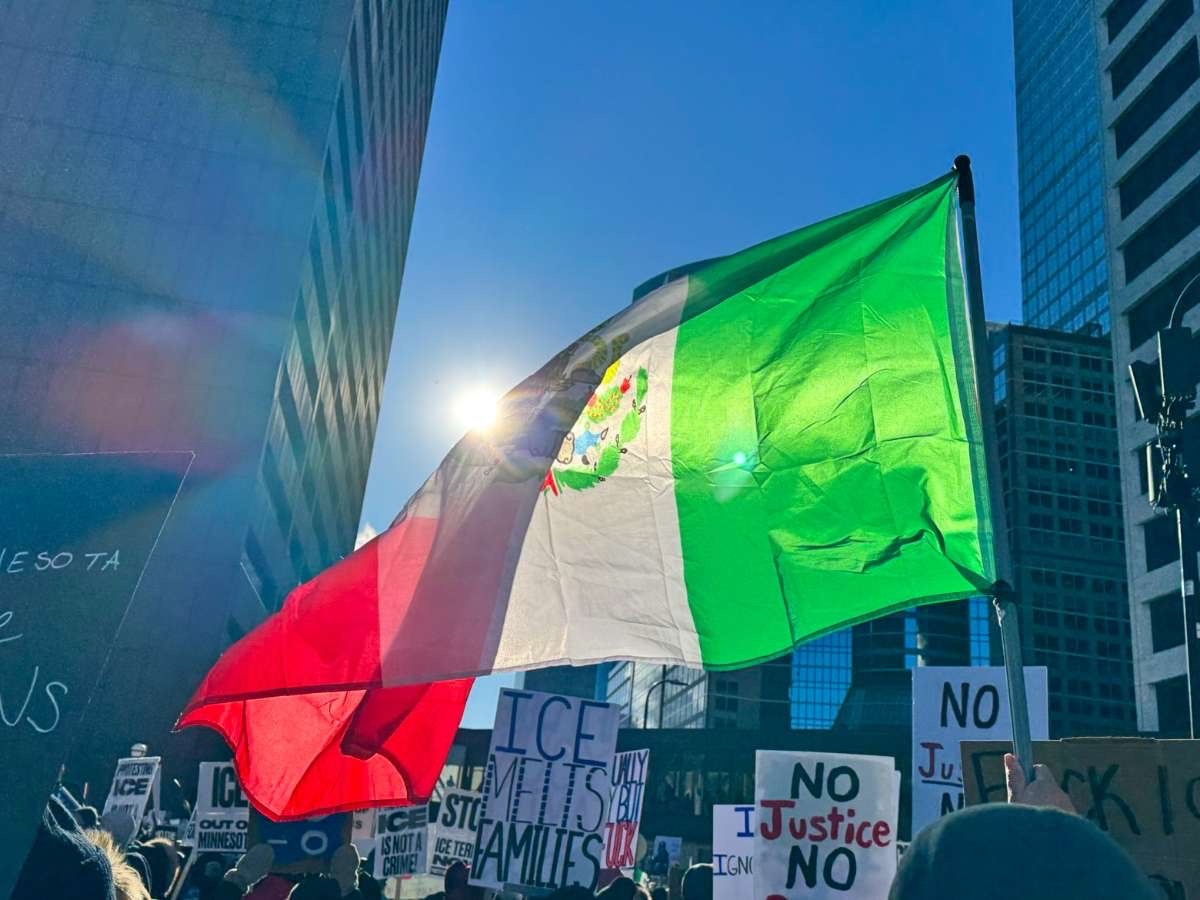


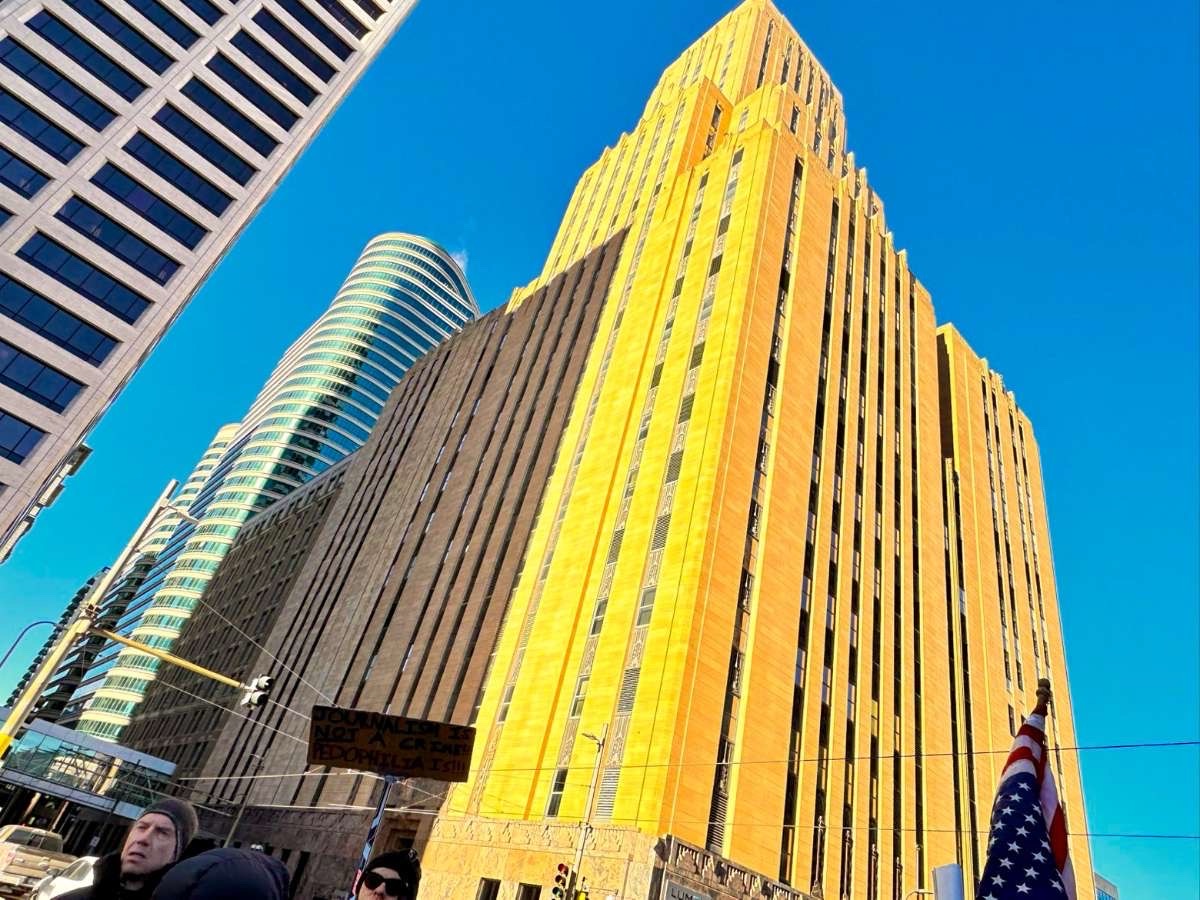
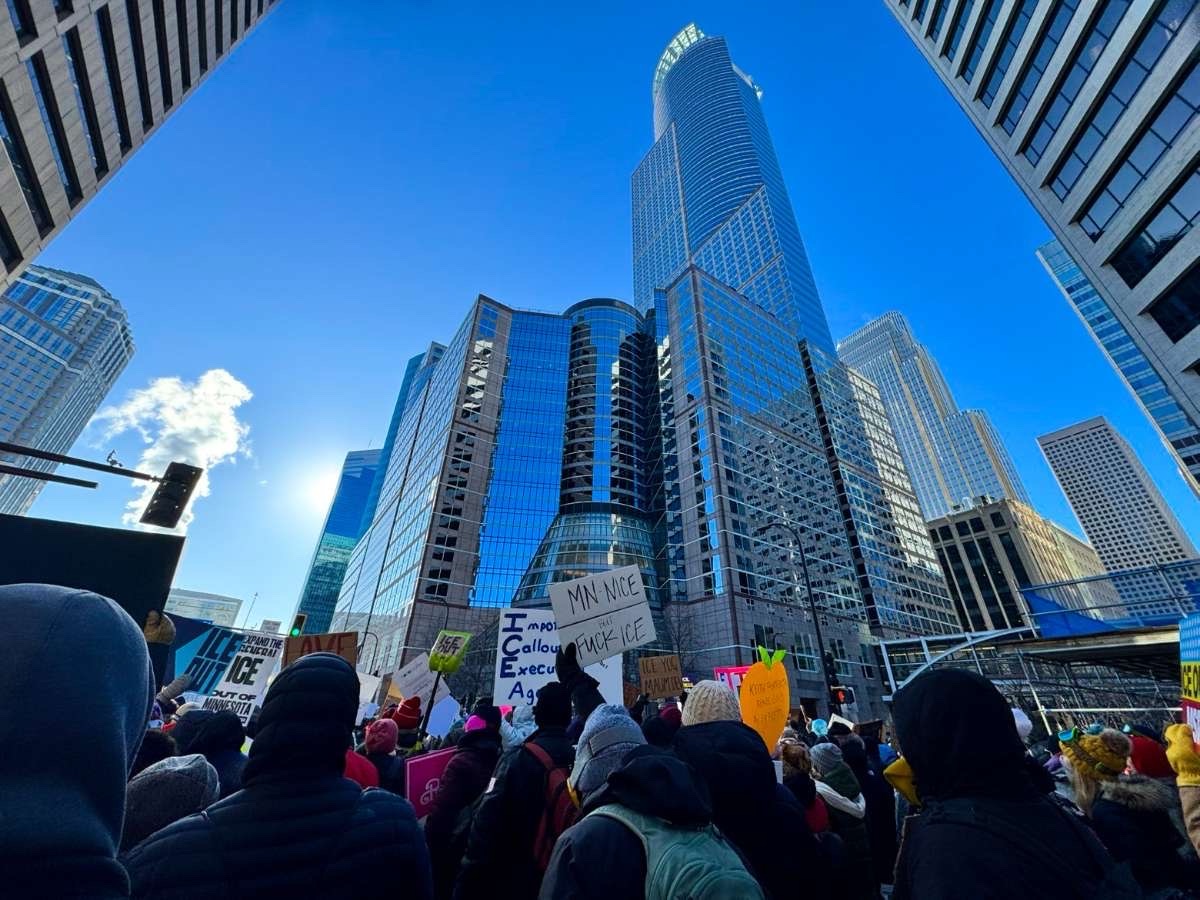
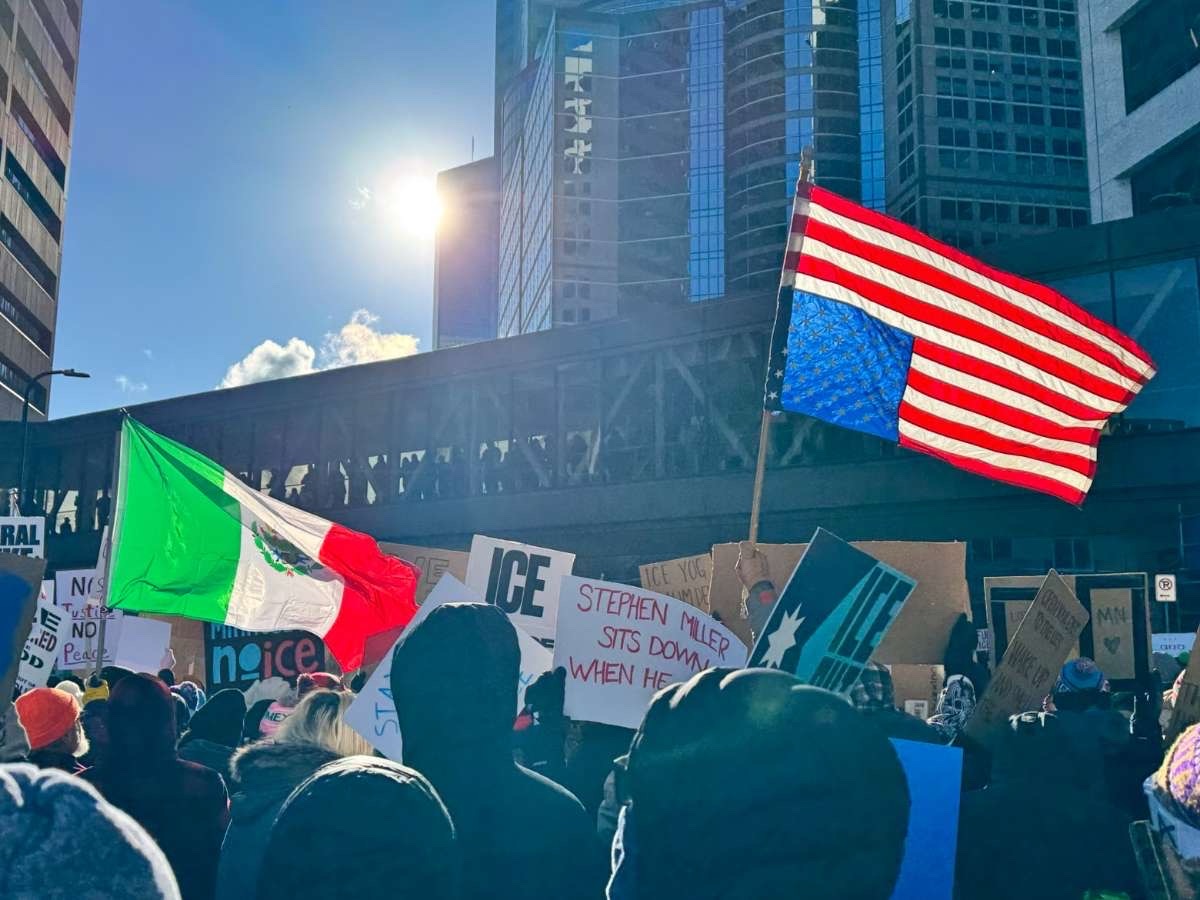

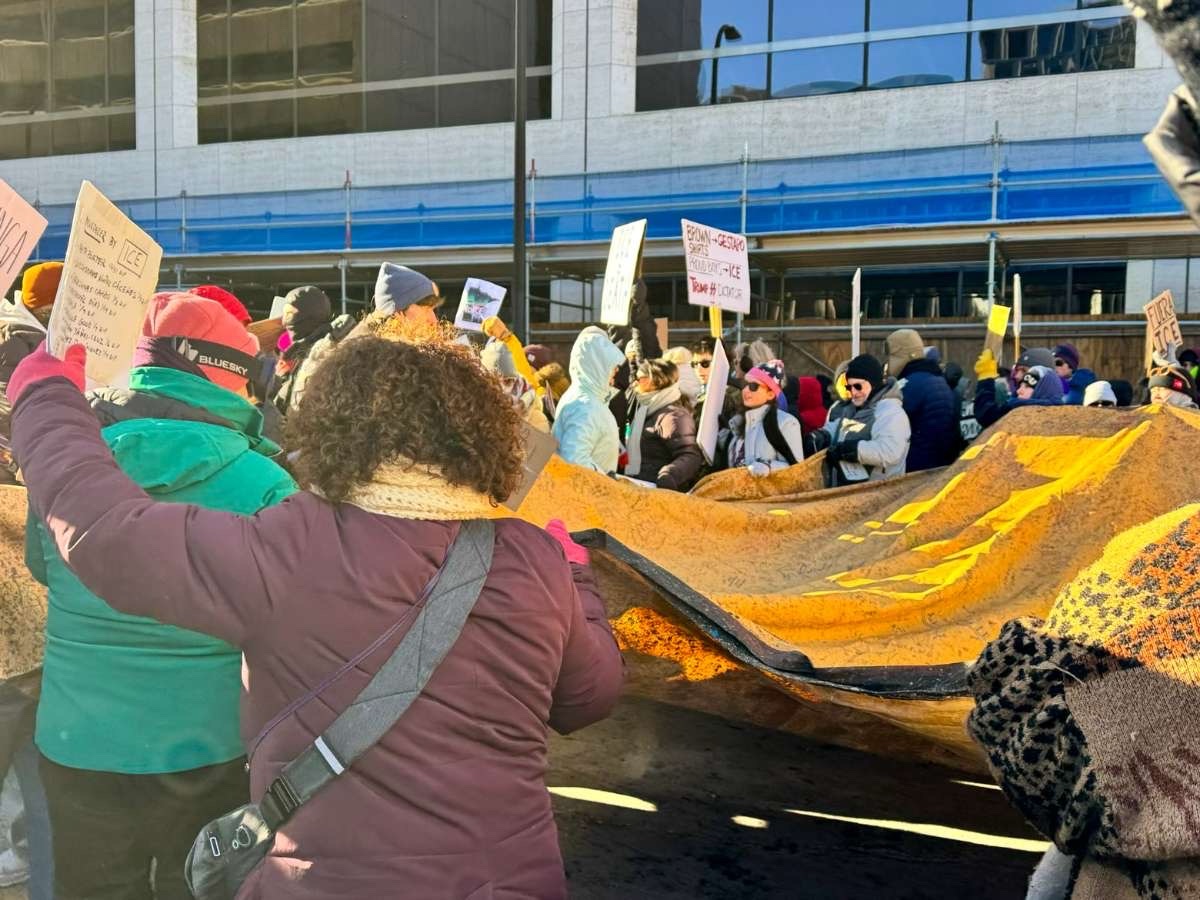
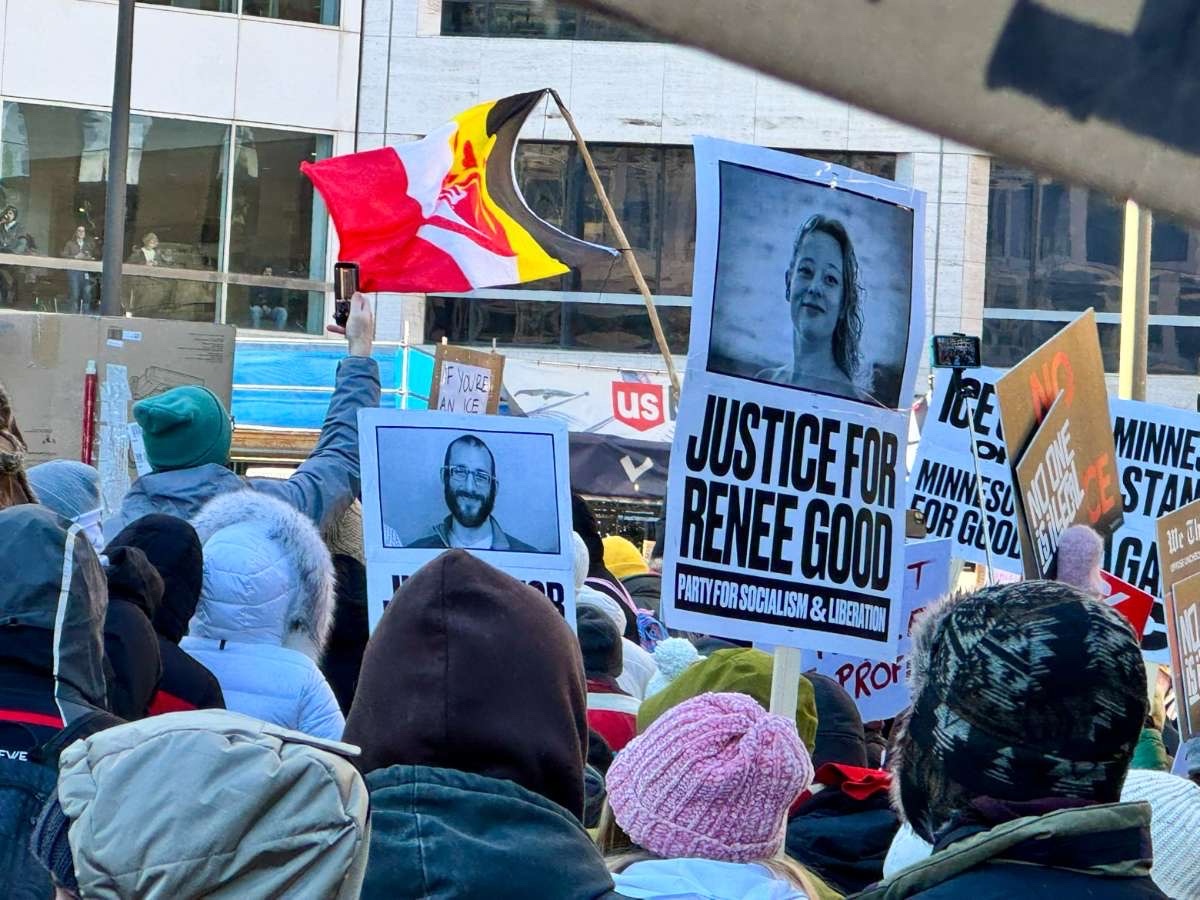
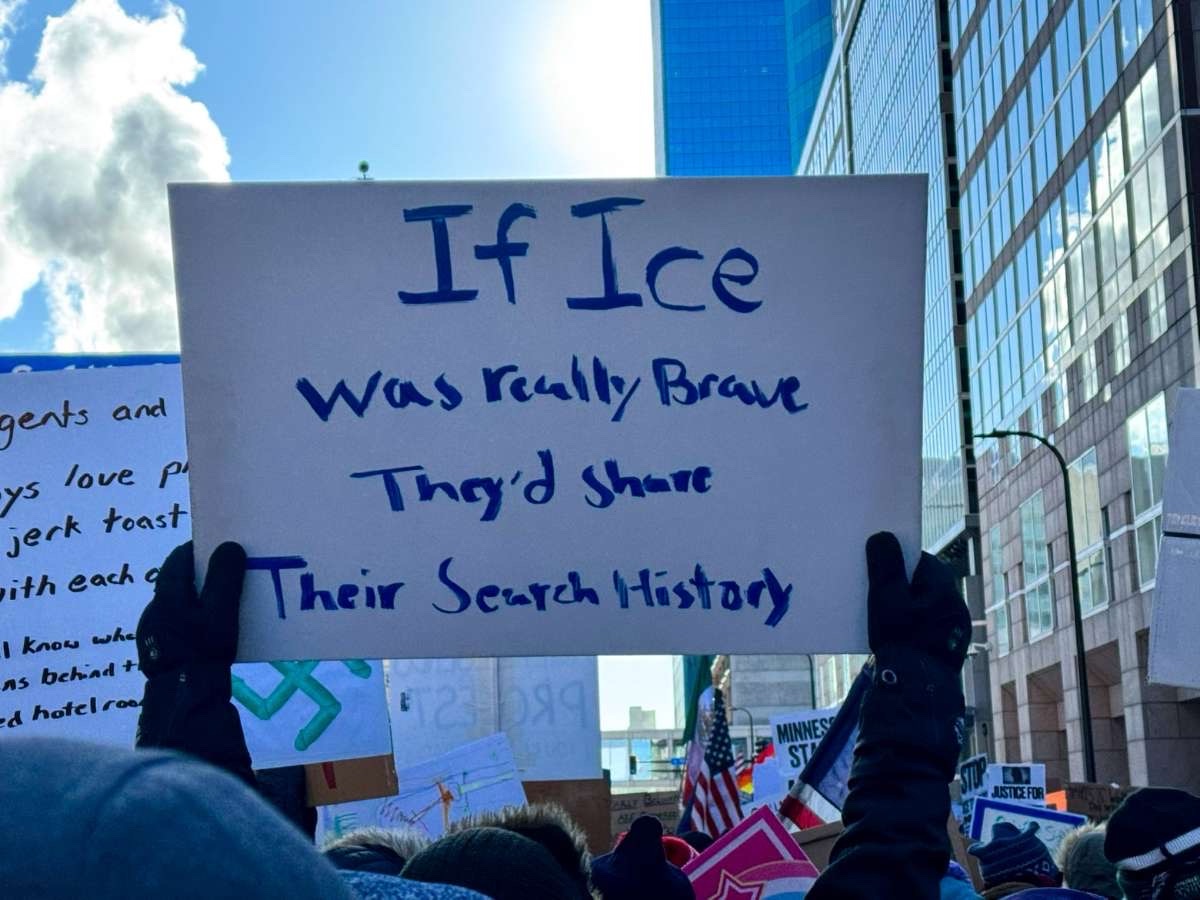
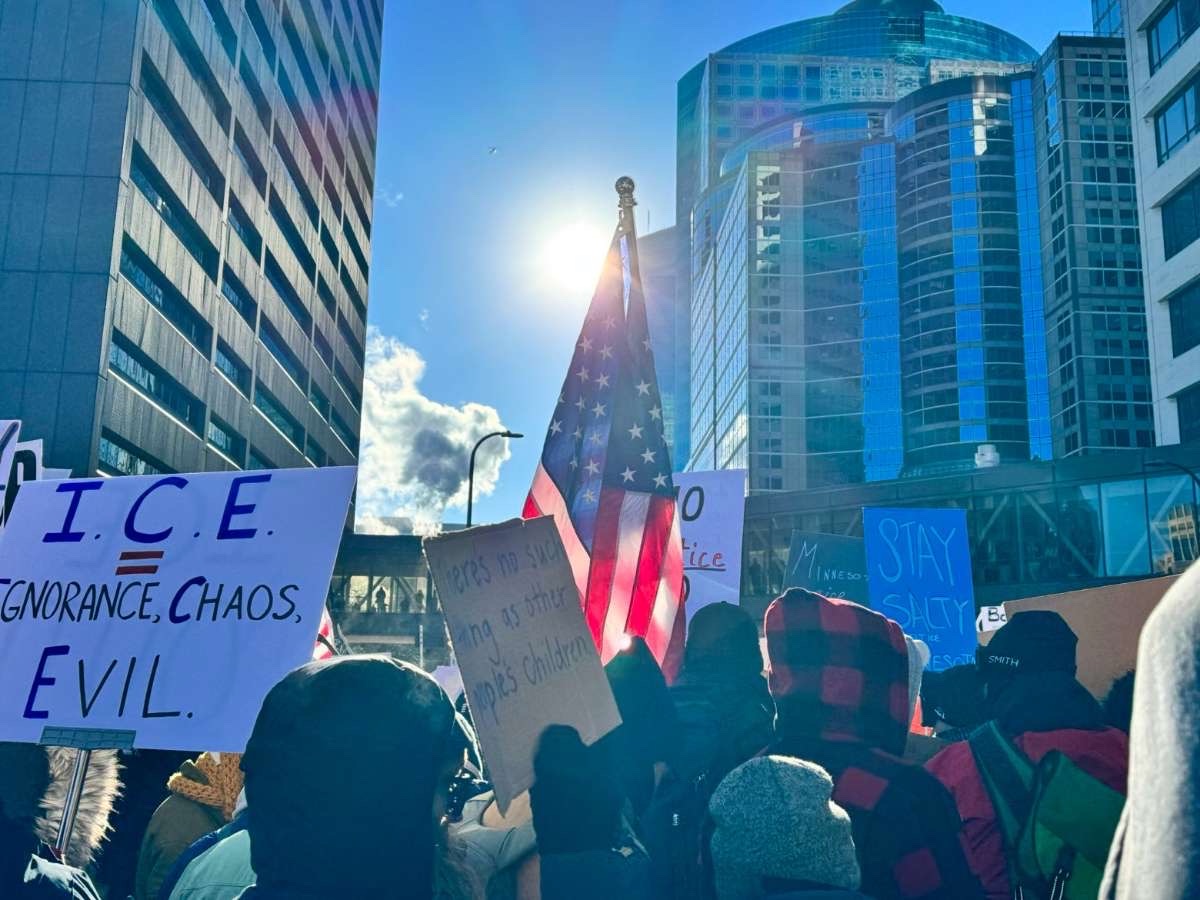
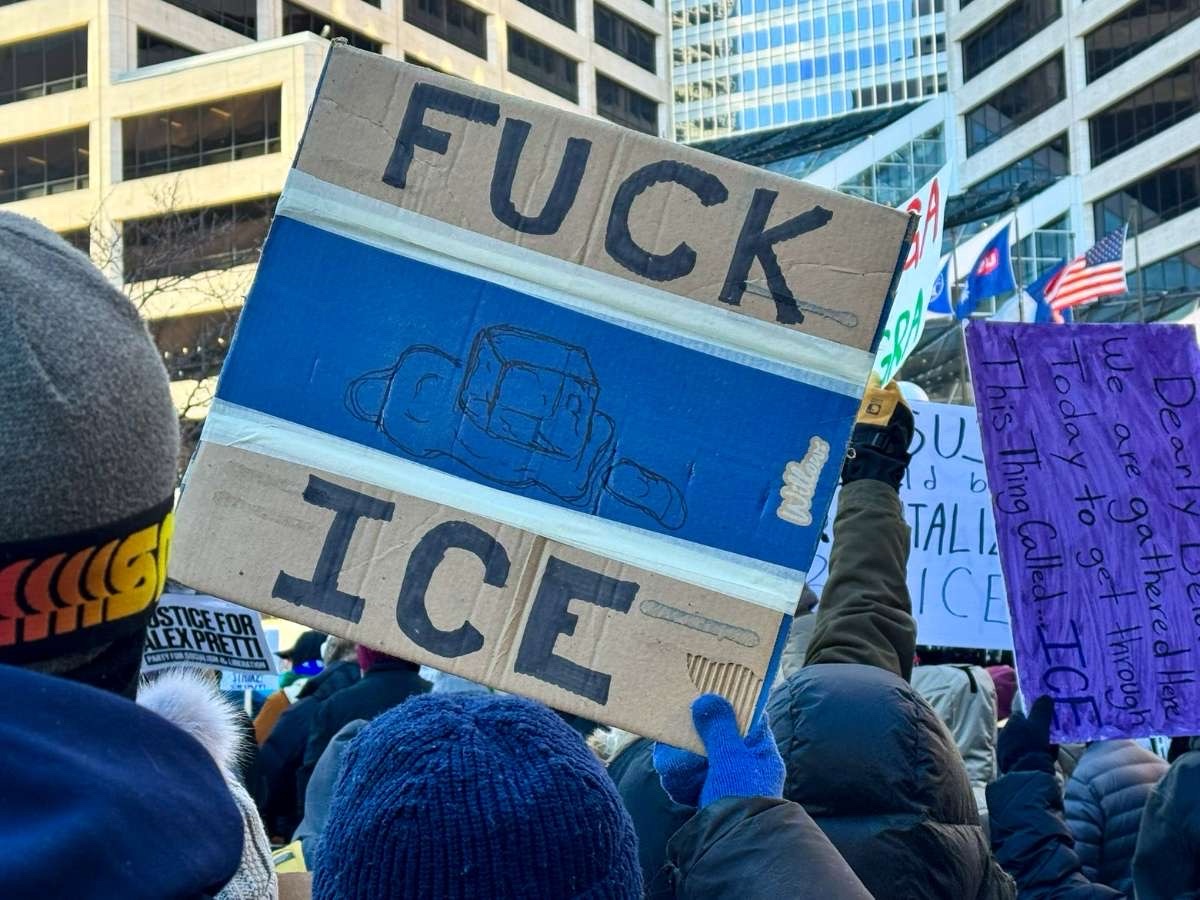
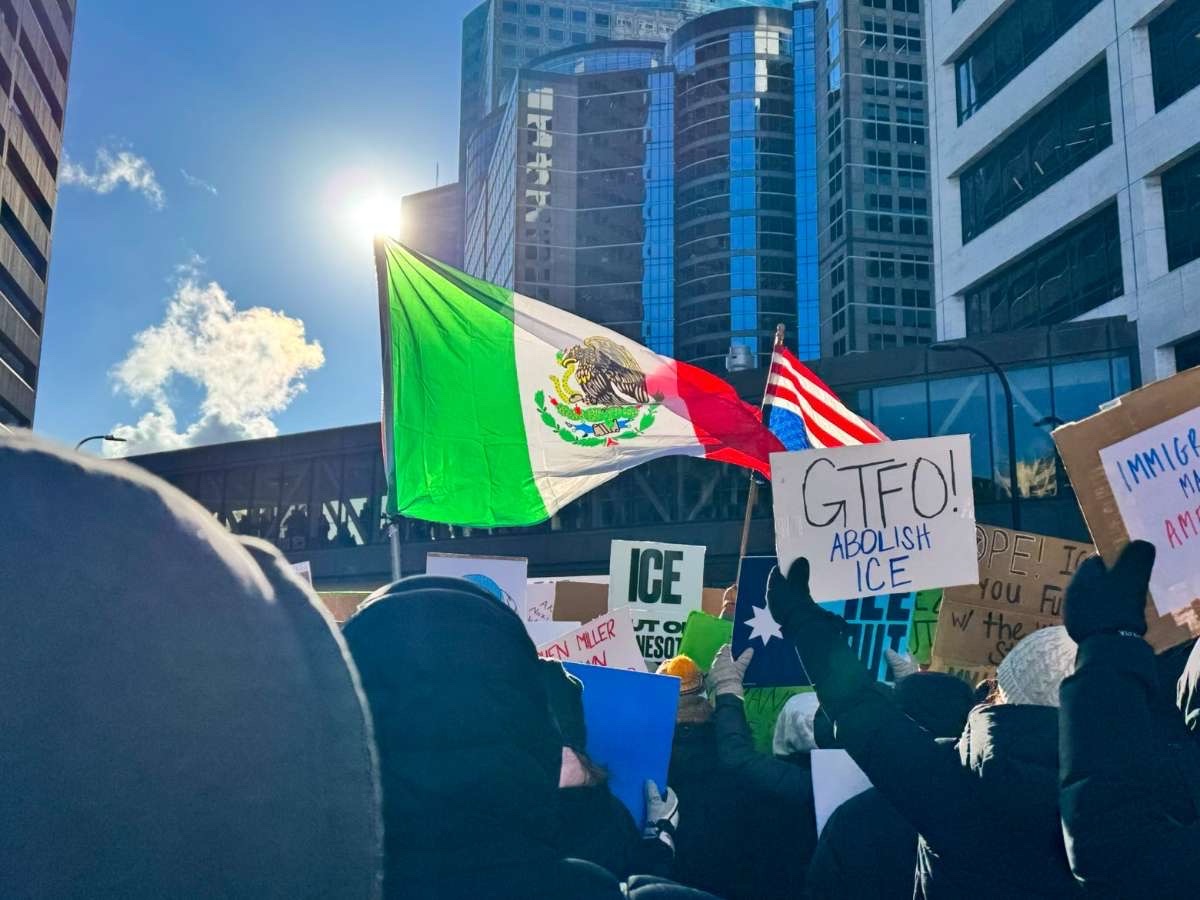
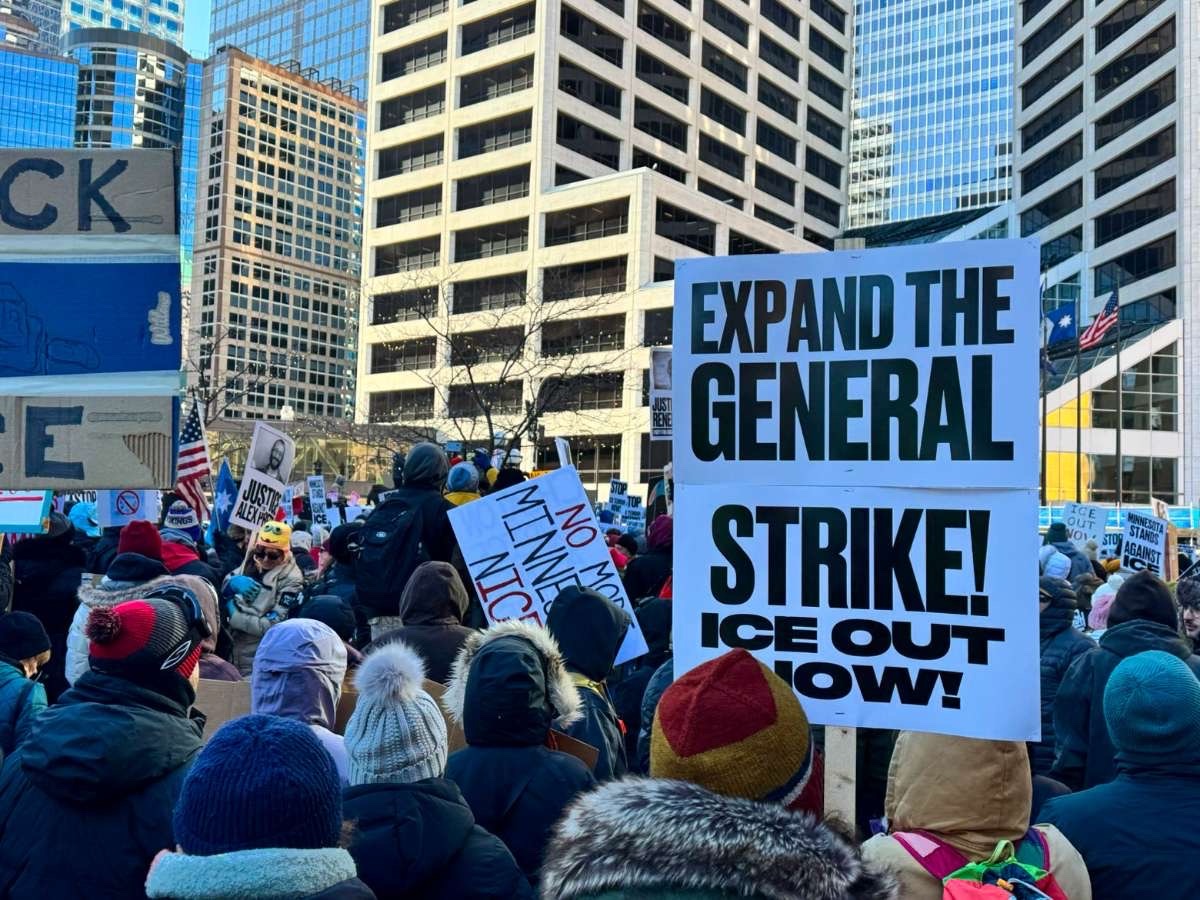

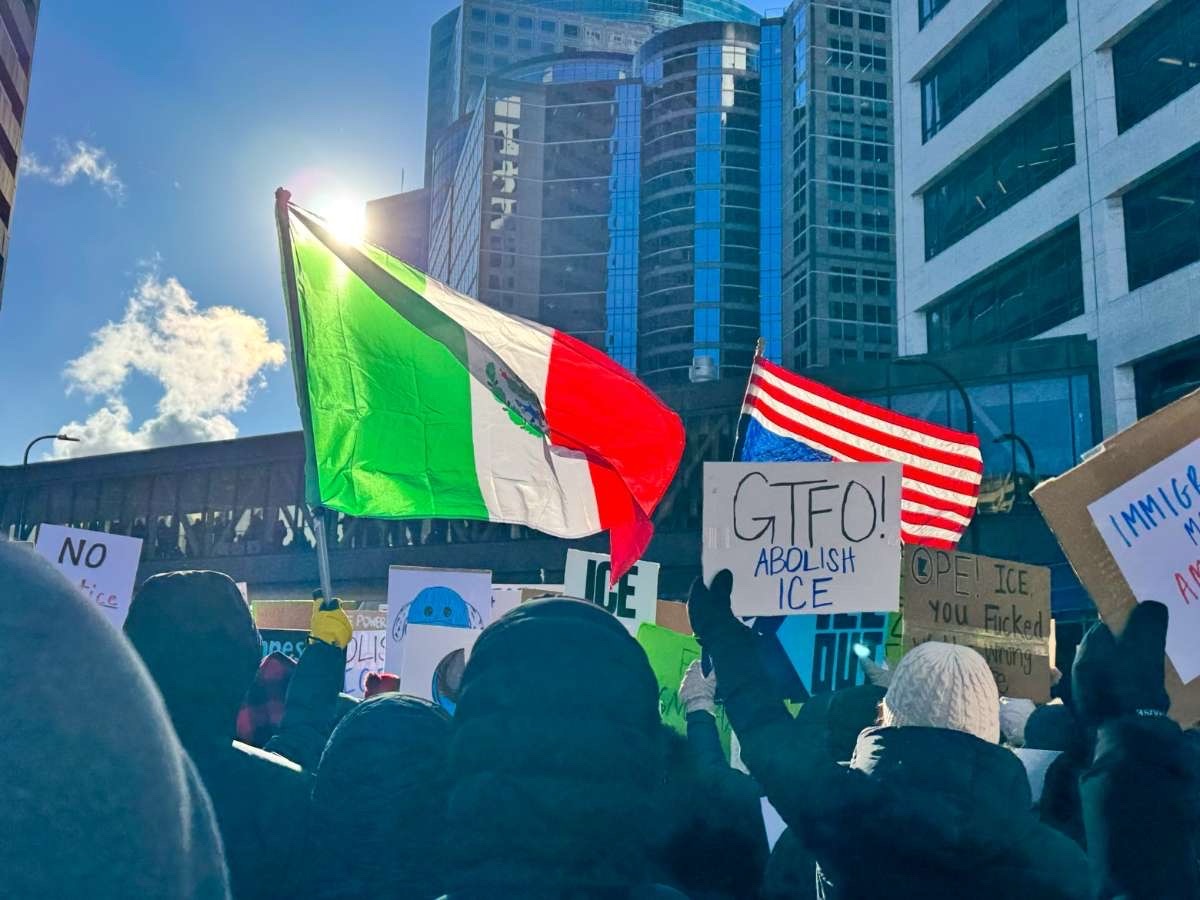
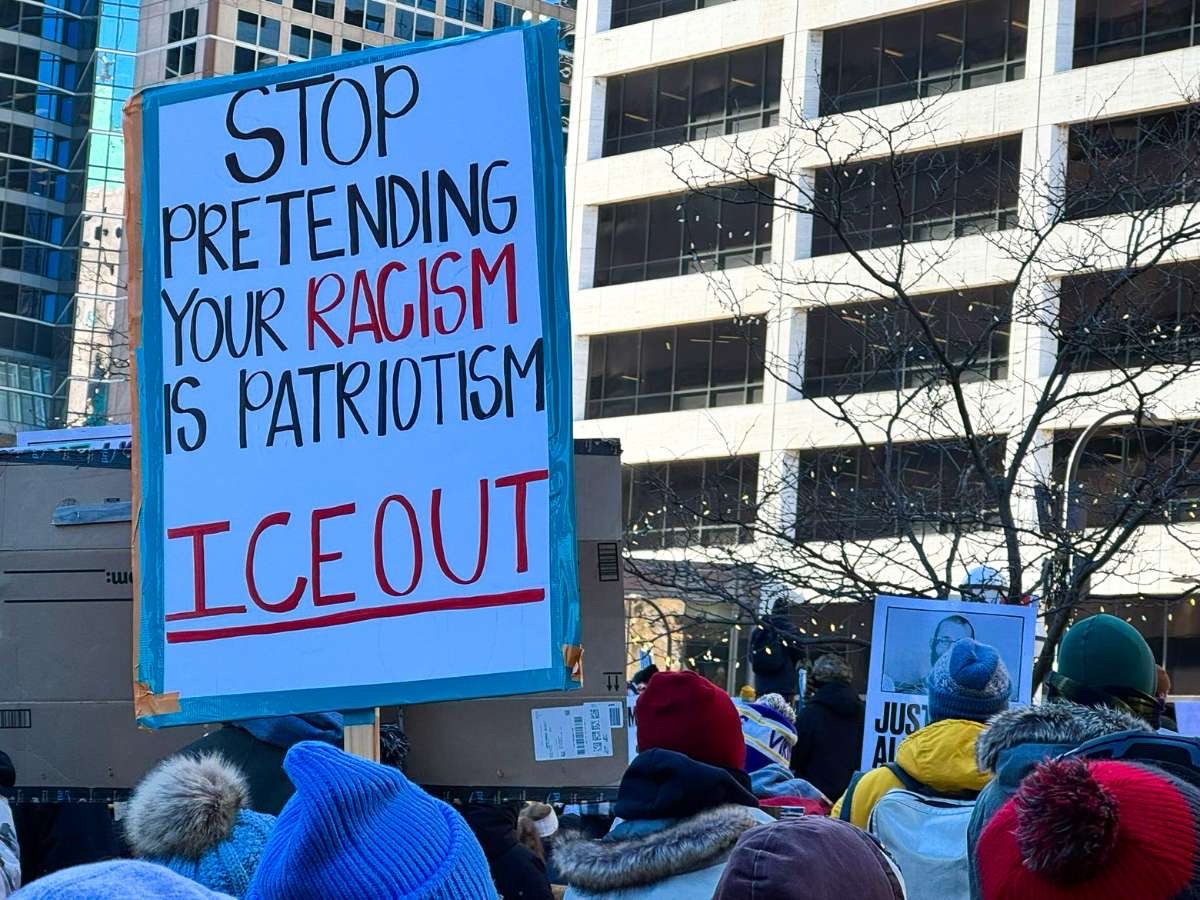
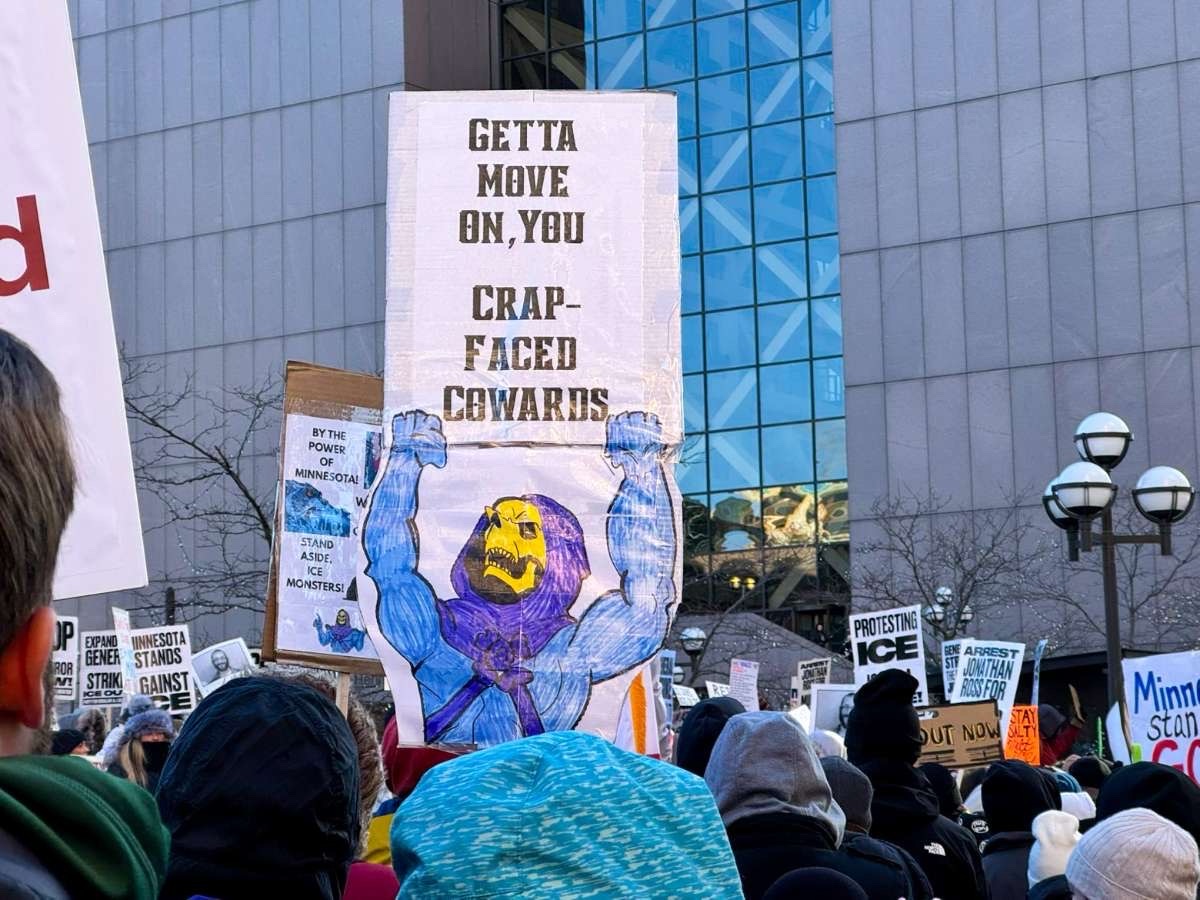
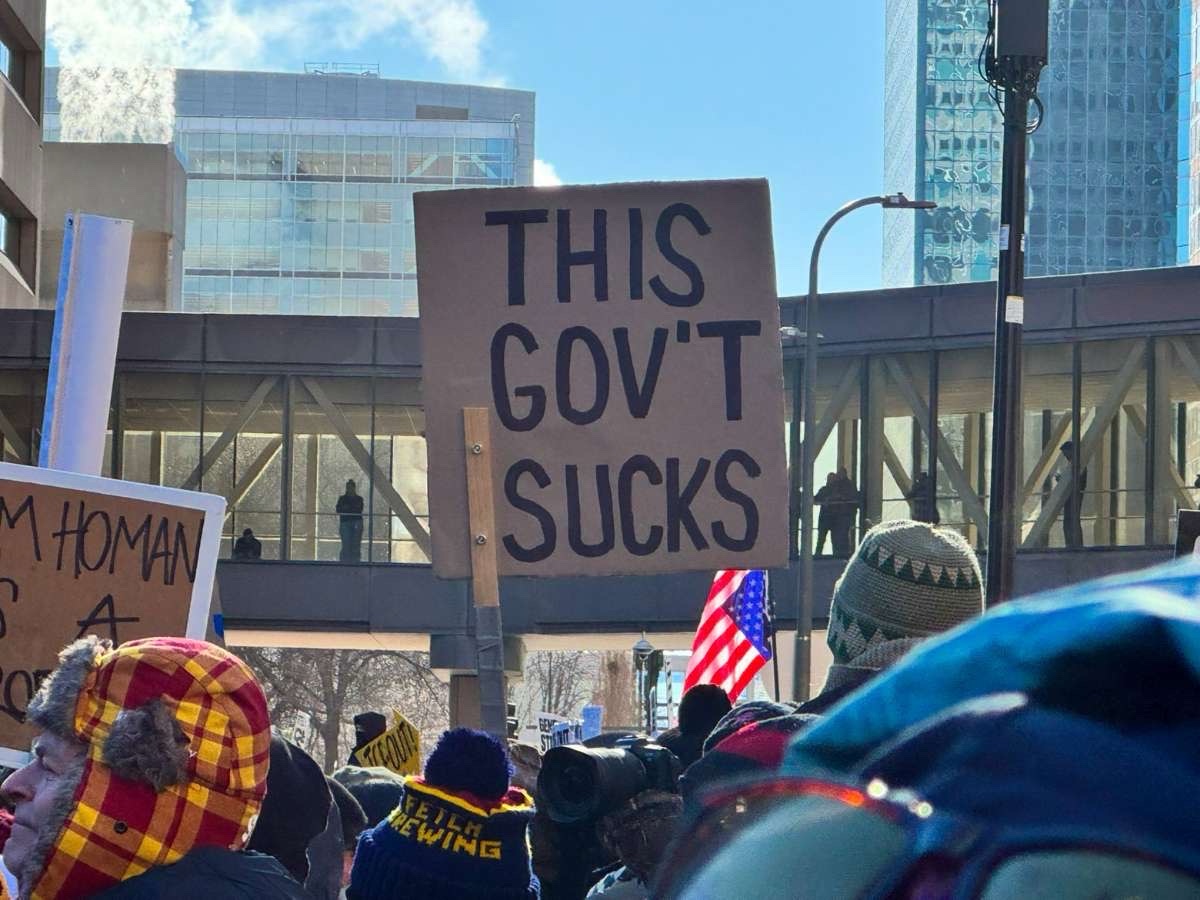
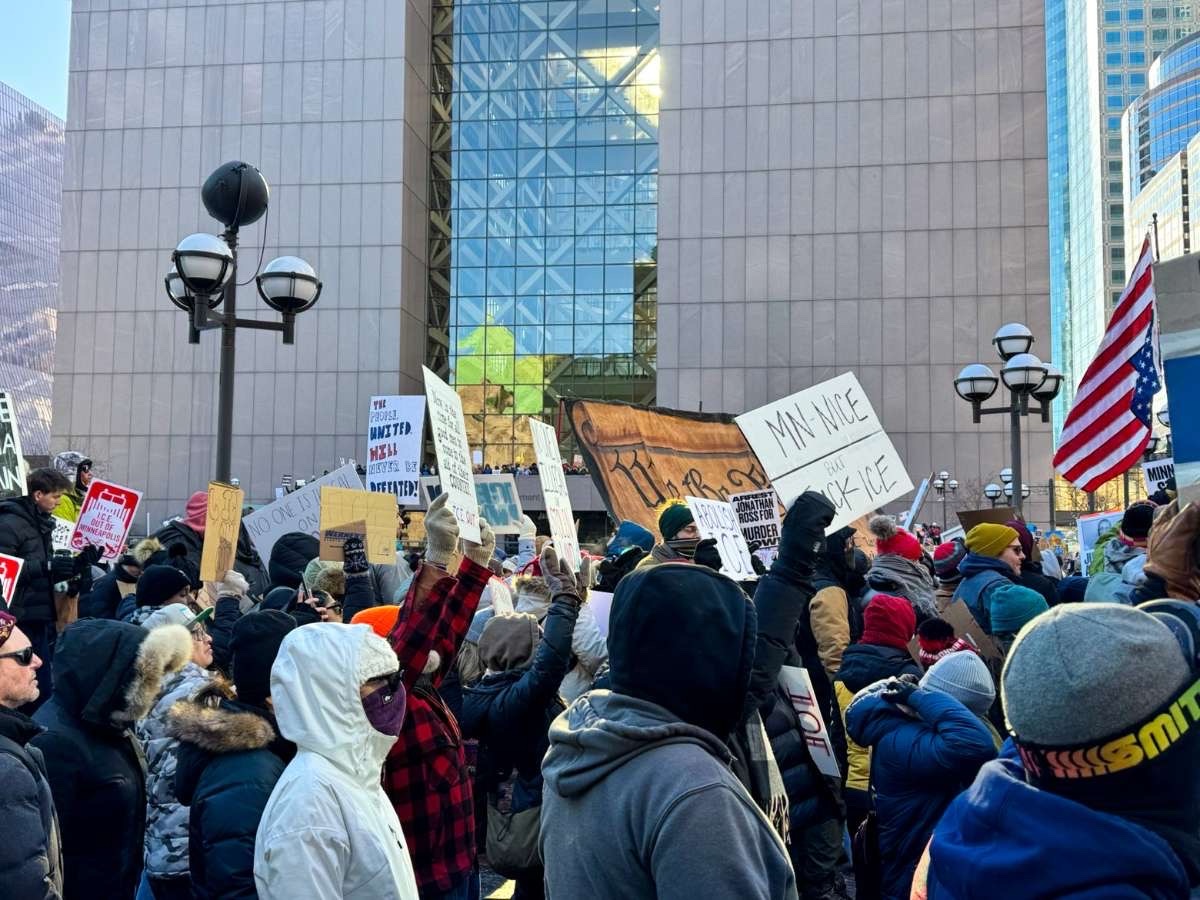


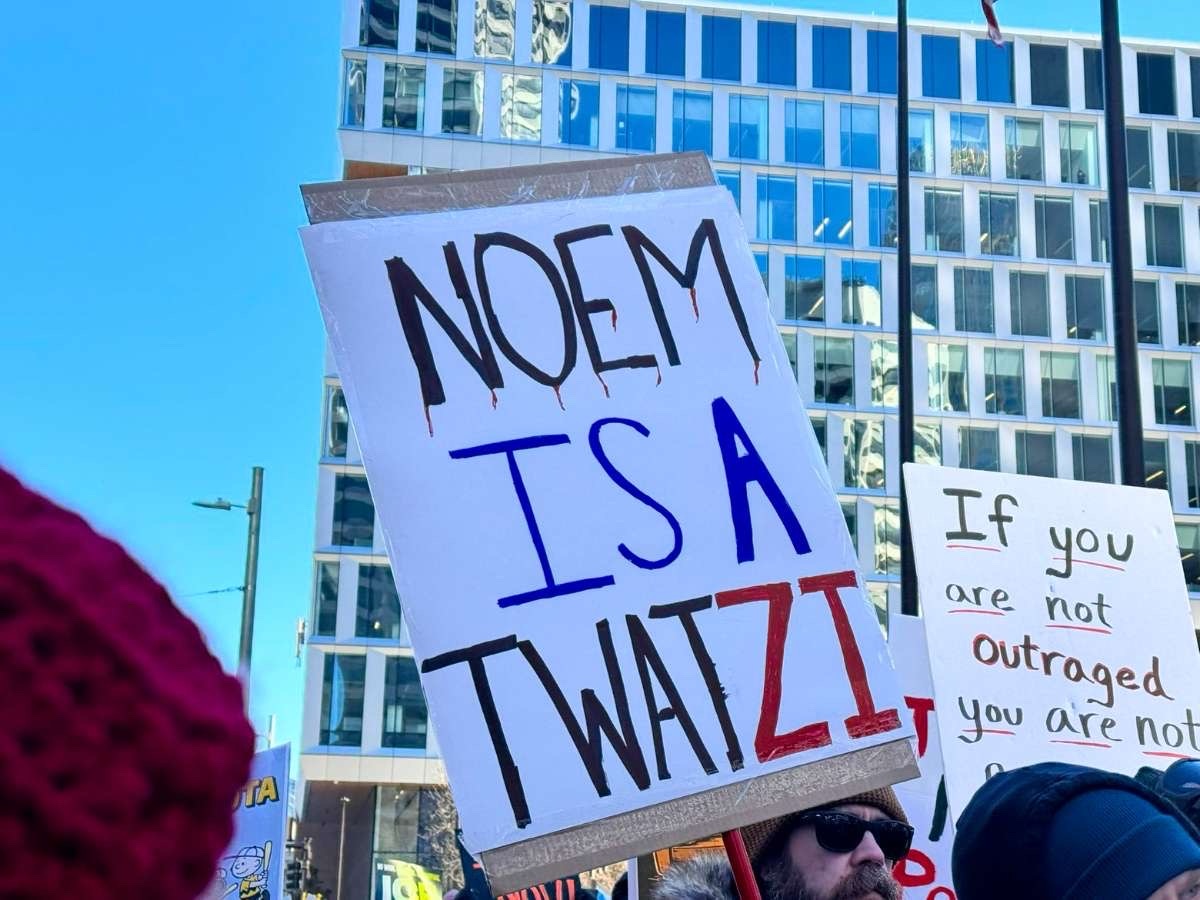
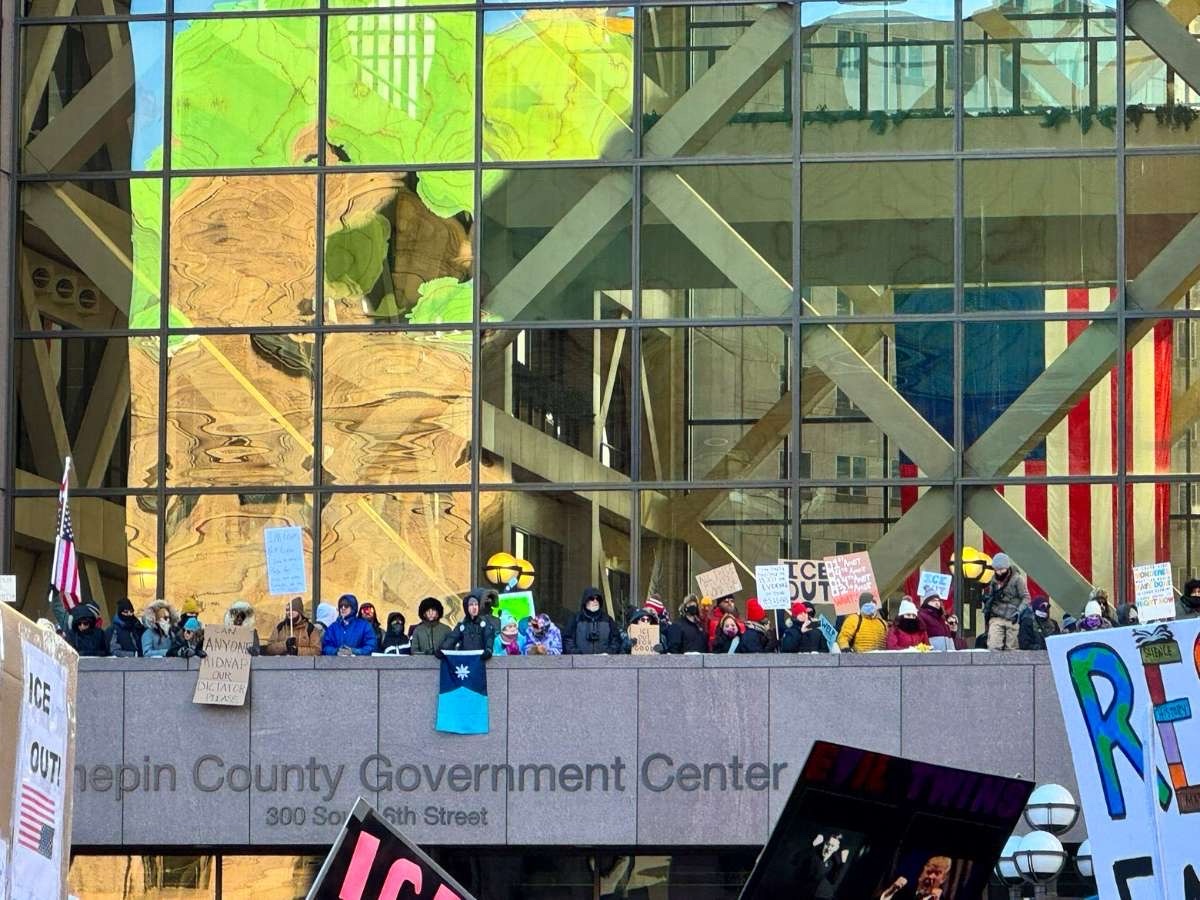

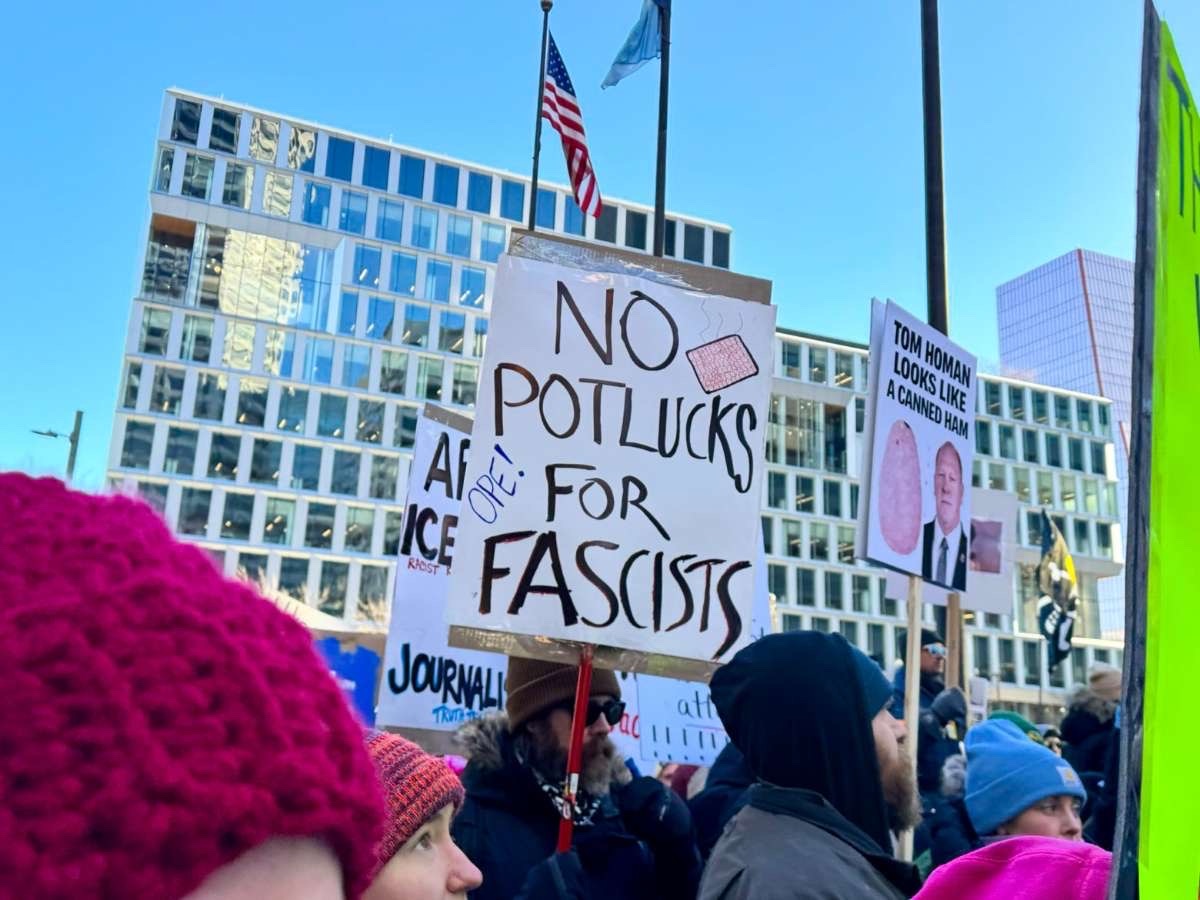

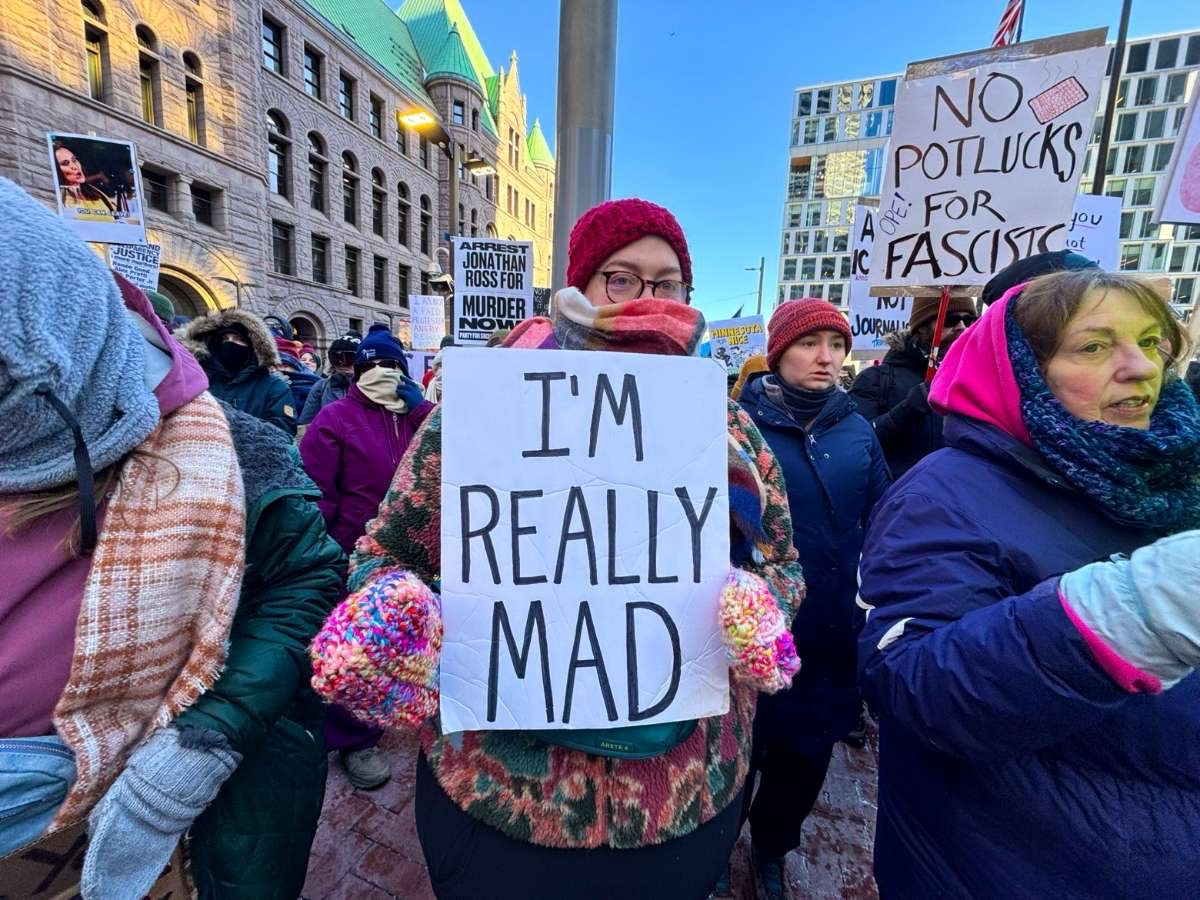
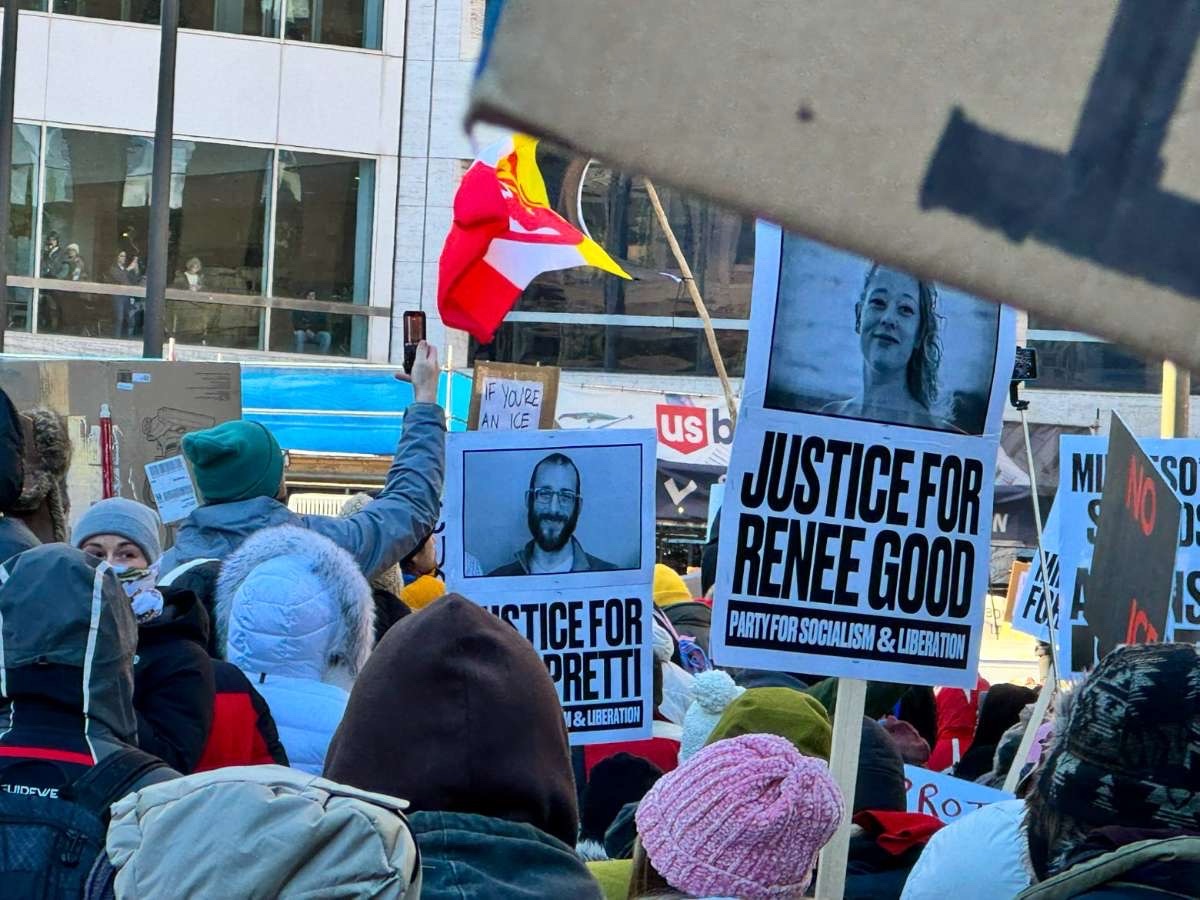

MINNEAPOLIS — A second major march drew thousands in Minneapolis on Friday as part of coordinated nationwide protests calling for an end to Immigration and Customs Enforcement operations across the United States.
The demonstrations, organized under the banner “National Shutdown,” urged participants to skip work, school and shopping as a form of economic protest. Rallies and marches took place in cities across all 50 states, with Minneapolis serving as a focal point for the movement.
In Minneapolis, a rally and march began at 2 p.m., with organizers saying more than 500 businesses committed to closing or participating in solidarity actions. The demonstration followed a similar strike last Friday that drew tens of thousands despite sub-zero temperatures.
As I made my way to the gathering point downtown, I saw something unexpected: a bald eagle soaring over Loring Park. It was a moment that was both rare and inspiring, given the bird’s symbolic significance to the nation. As this bird guided me downtown, I began to see a multitude of protesters headed to Government Plaza.
“The people of the Twin Cities have shown the way for the whole country — to stop ICE’s reign of terror, we need to SHUT IT DOWN,” organizers wrote on the National Shutdown website. “It is time for us to all stand up together in a nationwide shutdown and say enough is enough.”

The protests came in response to heightened federal immigration enforcement under the Trump administration, including the fatal shootings of two U.S. citizens by federal agents in Minneapolis this month. Alex Pretti, 37, an intensive care unit nurse, was shot and killed Saturday during a confrontation with immigration agents. Renee Good, 37, was killed Jan. 7 by an ICE agent during a federal operation.
The first general strike on Jan. 23 drew an estimated 50,000 protesters in Minneapolis, according to organizers at Indivisible Twin Cities. More than 700 businesses across Minnesota closed in solidarity. The action was endorsed by the Minneapolis Regional Labor Federation, which represents more than 80,000 workers across 175 unions. Some unions did not endorse today’s strike.
“Working people, our schools and our communities are under attack,” MRLF President Chelsie Glaubitz Gabiou said in a statement. “Union members are being detained commuting to and from work, tearing apart families. Parents are being forced to stay home, students held out of school, fearing for their lives.”
Friday’s National Shutdown was endorsed by dozens of organizations nationwide, including CodePink, the Council on American-Islamic Relations and various labor and community groups. Student walkouts took place in New York City and other major metropolitan areas.

At First Avenue in Minneapolis, a benefit concert featuring Tom Morello, Rise Against and other performers was scheduled for Friday evening to raise money for the families of Pretti and Good. Tickets for the event sold out.
The protests have gained momentum as public opinion appears to shift. A recent Pew Research Center survey found 69 percent of Americans say President Trump is trying to exert more power than previous presidents.
Organizers are also pressuring Congress to cut funding to the Department of Homeland Security, which oversees ICE. Senate negotiations over government funding have been complicated by Democratic demands for reforms to immigration enforcement practices.
Tom Homan, Trump’s border czar, said Thursday the administration is developing a “drawdown plan” for federal agents in Minnesota but emphasized it would only occur after seeing cooperation from state and local officials.

Minneapolis Mayor Jacob Frey said he had productive calls with Trump and Homan but would “believe it when I see it” regarding any federal drawdown.
The protests were part of a broader resistance to what organizers described as aggressive and unconstitutional immigration enforcement tactics. Video evidence from Pretti’s shooting contradicted federal officials’ initial account, showing he had already been disarmed when he was shot by two agents.
Looking ahead, organizers announced plans for a third round of “No Kings” protests this spring. Previous rallies have drawn millions of people, and organizers predicted the March 28 demonstration could be “the largest protest in American history.”

Minneapolis Public Schools and several businesses announced closures for Friday in response to the planned demonstrations. Police said they coordinated with organizers to ensure public safety during the march, which remained peaceful throughout the afternoon.
While the protest was proceeding, news broke out that incarcerated independent journalist Georgia Fort had been released.


